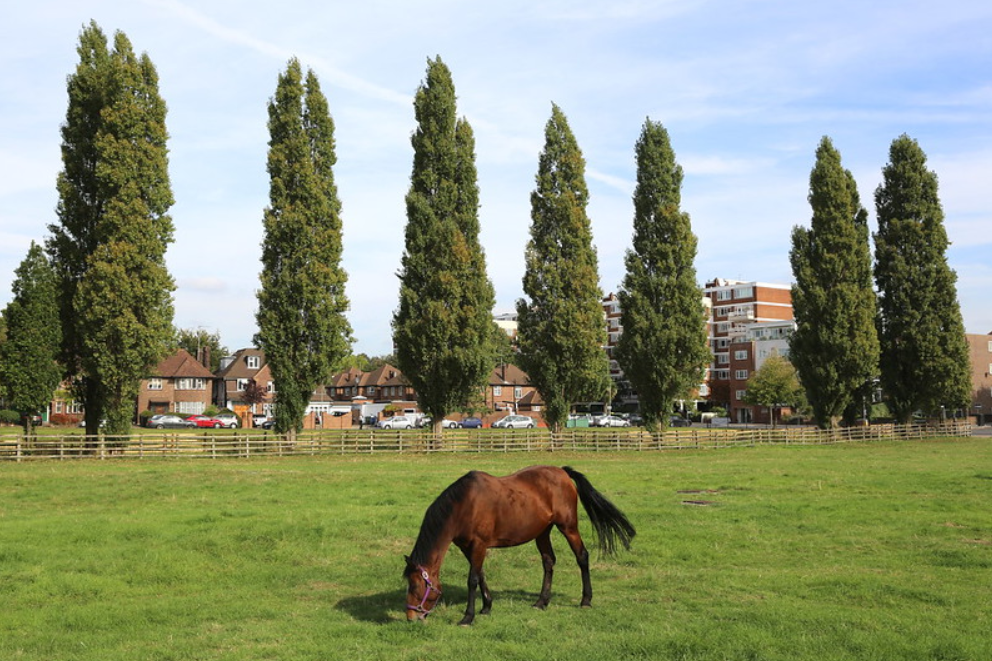
College Farm is widely recognised as one of the first model dairy farms to establish benchmarks for hygiene and cleanliness in British agriculture. By transforming the approach to livestock management, it attracted customers and visitors alike with pioneering concepts in both farming and leisure. Consequently, the farm gained popularity among the public as a destination for recreation and learning. Read more at londoname.
The History and Development of College Farm
In 1868, George Barham, the founder of Express Dairies, leased Sheephouse Farm, a site spanning approximately 390,000 square metres. He aimed to create a model dairy farm that championed hygienic practices—a rarity at the time. Spearheaded by architect Frederick Chancellor, the project cost nearly £5,000 and was finally completed in 1883.
Named after the neighbouring Christ’s College, College Farm served as a beacon for sanitary standards in the dairy industry for decades. However, by the early 20th century, Express Dairies concluded that it was no longer economically viable as a purely agricultural enterprise. In 1909, the team decided to repurpose the farm into a visitor attraction, purchasing the lease on the buildings while retaining several adjoining fields.
Following this shift, College Farm quickly became one of London’s most popular family leisure destinations. Furthermore, it evolved into a global training centre for dairy industry experts. The farm gained particular significance for its breeding of Guernsey cattle, as many improvements to the breed were pioneered here.
In the 1960s, the Grand Metropolitan Hotels chain acquired Express Dairy. The group planned to build housing on the College Farm site but failed to secure planning permission. In 1974, the Department of the Environment purchased the farm as part of a scheme to widen the North Circular Road, another project that ultimately never came to fruition.
To breathe new life into the historic site, Chris Ower took on a short-term lease of College Farm in 1976. Together with his wife Jane, he moved into the only habitable room on the premises, where they lived for six months. The couple poured all their funds into renovations and the construction of stables: first on the site of the former museum, and later replacing the milking parlour. Over time, this developed into a riding school housing around thirty horses.
In 2004, local activists led by Chris and Jane Ower established the College Farm Trust to restore the site as a visitor centre. Tea rooms were opened in the farm’s oldest section. Eventually, the Trust took control of the entire 10-hectare site. Despite the looming threat of redevelopment, the owners successfully proved their agricultural tenancy in court. As time passed, the site began operating as a pet store.
The Recognition and Significance of College Farm
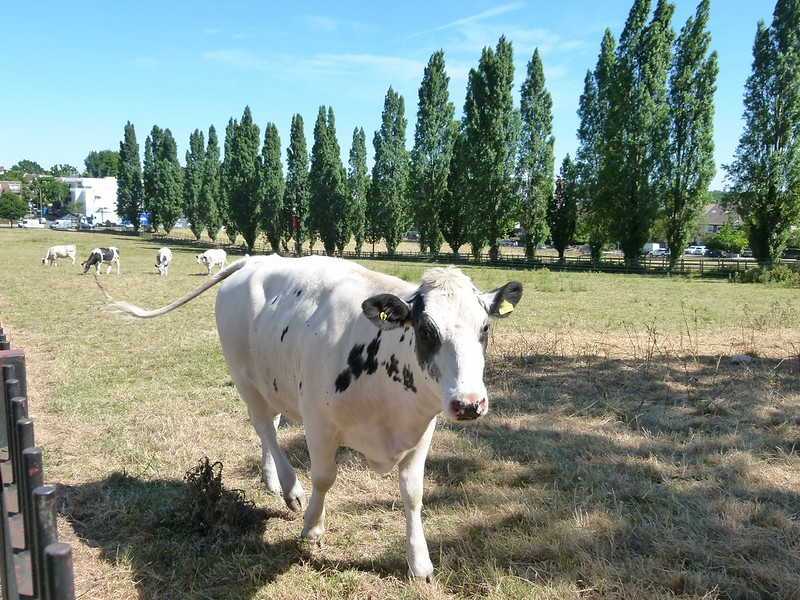
College Farm became a paragon of modernisation in the British dairy industry. Its uniqueness lay in providing a clean, healthy environment for animals, distinguishing it significantly from other London farms of the era. By keeping Guernsey, Shorthorn, and Kerry cattle, alongside Shire horses and those used by roundsmen, the farm demonstrated exceptional standards of animal welfare. Furthermore, Sir George Barham’s travels to the USA, India, and Jamaica brought the farm global renown, as he actively championed quality and hygiene standards in the dairy industry abroad.