In the mid-18th century, Rotherhithe was home to one of London’s largest shipyards, where warships and trading vessels were built for the British Empire. Over time, however, its industrial might declined, leaving behind desolate docks and derelict land. In the latter half of the 20th century, against this historical backdrop, Surrey Docks Farm emerged—a farm that has become a centre for environmental education and social integration. Read more at londoname.
The Founding and Development of Surrey Docks Farm
In 1975, Hilary Peters founded Surrey Docks Farm on dockland at Rotherhithe Street. The project’s initial goal was to raise livestock and produce food on the derelict site. Seeking to expand its activities, the founder registered the farm as a Provident Society in 1980.
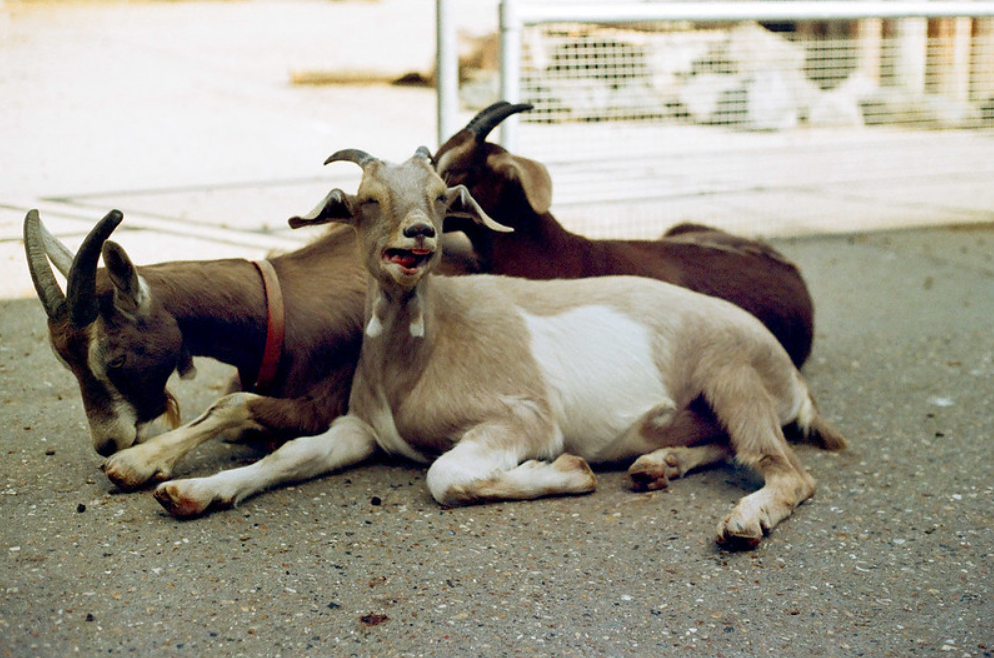
In 1986, Surrey Docks Farm moved to a new site on the banks of the Thames near South Wharf. At that time, it took the form of a goat farm with chicken coops. The goats grazed on the overgrown scrubland, while the chickens roamed freely on the deserted wharves. The sale of goat’s cheese and eggs became the farm’s main source of income. Initially, it occupied an area of 200 acres, leased from the Port of London Authority. However, this space was eventually reduced to just two acres.
Daphne Ferrigan, who lived and worked at the farm with her family from 1983 to 2003, had a major influence on its development. As an educator, she introduced a whole range of learning initiatives, among which the willow weaving workshop was particularly notable. Her work helped to transform the farm into a centre for education and environmental awareness. Although the holding had decreased in size, it became more structured and formal in its development.
In 2014, a team of staff and students from University College London, led by Ilan Adler, joined in the development of Surrey Docks Farm. They installed an innovative Sistema Biobolsa biodigester on its grounds. Its purpose was to convert livestock waste into sustainable energy and liquid fertiliser. This device turned out to be the first of its kind in Europe.
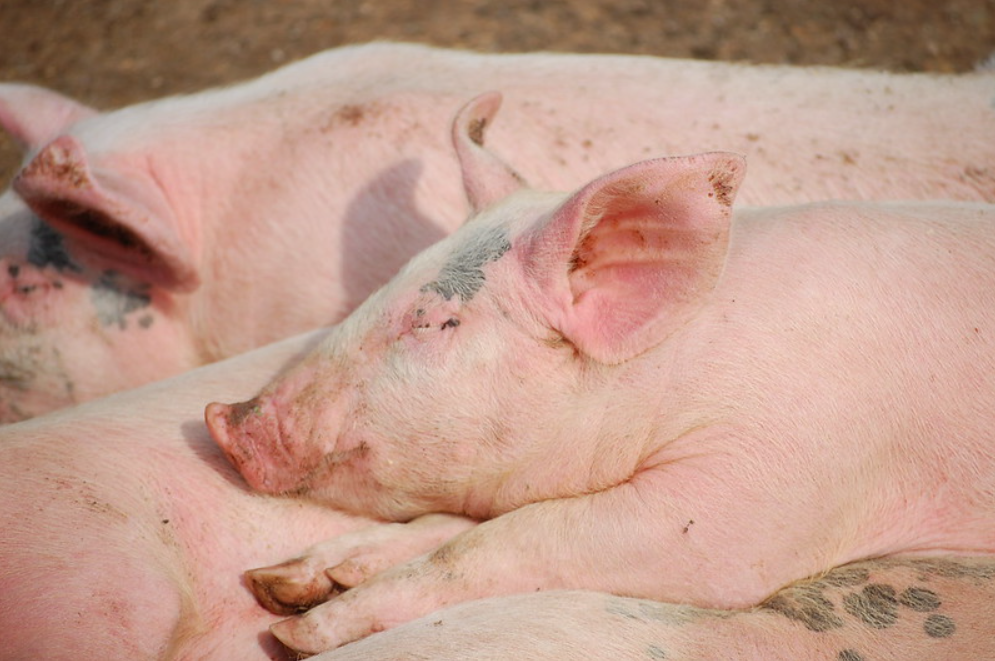
Soon after, Surrey Docks Farm faced new challenges. On the 14th of September 2018, eleven two-week-old piglets of the rare Oxford Sandy and Black breed were stolen from its grounds. The animals could not be found, raising concerns about their survival without their mother. This incident spurred the community into action: a fundraising campaign was launched to upgrade the security systems. Thanks to the generosity of local residents, around £1,000 was raised.
In 2020, Surrey Docks Farm underwent a major £860,000 renovation led by the architectural practice Pup. The project involved the reconstruction and extension of existing buildings with a new landscape design. Thanks to grants and funding, the farm gained a modern teaching kitchen, meeting rooms, offices, and toilet facilities. The centrepieces of the renovation were a multi-purpose river room and a glazed glasshouse with views over the Thames.
Recognition and Significance of Surrey Docks Farm
Although Surrey Docks Farm is no longer wild in the original sense, it continues to exist as a vibrant and diverse platform for urban farming. It is home to Toggenburg and Anglo-Nubian goats, Oxford Down sheep, Oxford Sandy and Black pigs, ducks, geese, and chickens. Its well-developed infrastructure includes an orchard and herb garden, a flower garden, vegetable plots, and wildlife areas that provide a haven for local species of birds and amphibians. The farm has adult education classrooms, a café, a forge, a bee room, and a fully equipped educational space that is actively used by schools from all over London.