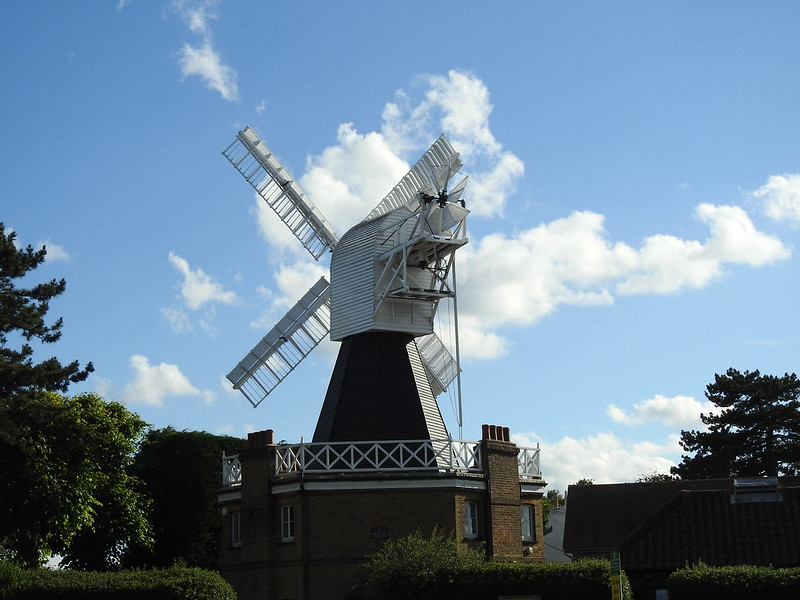
In the early 19th century, the residents of Wimbledon were not entirely satisfied with the quality of factory-milled flour and wished to have their own local mill. It was this desire that prompted the creation of the Wimbledon Windmill. Over time, it has transformed into a living historical landmark and a museum dedicated to the traditions of milling and technical progress. Read more at londoname.
The Founding and Development of Wimbledon Windmill
In 1799, John Watney submitted an application to build a windmill on Wimbledon Common. However, it was rejected due to the lack of a detailed project plan. It was not until 1816 that Charles March made a similar request, which was granted in 1817. It was then that the mill, known as Wimbledon Windmill, was constructed.
Being a carpenter by trade, rather than a professional miller, Charles March proposed an original design that differed significantly from the traditional mills of that time. The base of Wimbledon Windmill was a single-storey, octagonal brick foundation. Above it, a second wooden floor was built to house all the working machinery. Completing the structure, the tower had a conical shape and supported a horizontal post, to which the cap with its sails was attached.
The operation of Wimbledon Windmill ceased in 1864. The lord of the manor, the 5th Earl Spencer, decided to limit access to the common lands. At that time, the mill was run by the Marsh family, who also owned other mills in Kingston. Ultimately, they insisted on the removal of the millstones and most of the equipment to avoid competition with their other businesses.
In 1893, an extensive restoration took place, resulting in a number of changes to the Wimbledon Windmill building. Until then, it had functioned as a hollow post mill, but after conservation, it was rebuilt as a smock mill. The height of the cap was reduced, and the tower was made taller to maintain the overall height of the structure. The post was removed, and an iron bearing was installed at the top of the tower, allowing the cap to continue rotating with the direction of the wind.
During the Second World War, Wimbledon Windmill underwent another phase of transformation. It was camouflaged with grey-green paint to reduce its visibility from the air near military camps. For the same security reasons, one of the sails was dismantled. In peacetime, the mill was restored to its usual appearance and repainted. However, in 1946, the sails had to be stopped due to significant wear on the gear mechanism.
In the post-war period, the fate of Wimbledon Windmill became a cause for public concern. In 1952, a thorough survey was conducted, and a list of necessary repairs was drawn up. Thanks to a public appeal for funds, the historic structure was restored, and the sails began to turn once more in 1957. Its final transformation into a cultural landmark took place in 1975, when it became a museum after another restoration.
The Legacy and Significance of Wimbledon Windmill
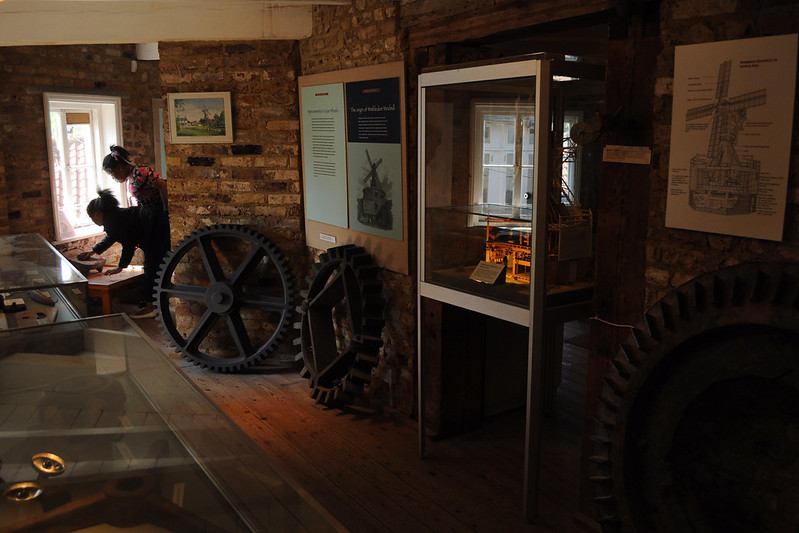
Wimbledon Windmill remains one of the few surviving windmills in Great Britain that showcases the technology and engineering solutions of the 19th century. The modern functioning of the mill as a museum has significantly expanded its cultural and educational role. Its exhibits include interactive models and demonstrations of the grain milling process. Visitors have the opportunity to explore the actual structure of the windmill, understand the principles of its operation, and appreciate its importance to the community throughout different historical periods. Listed as a Grade II* listed building, the mill has received official recognition for its historical and architectural heritage.