

Park · London · ⭐ 9.5/10 · 142671 reviews · updated: 2026-08-04 08:22:14
Address: London, United Kingdom
Hyde Park — the capital’s great open-air commons
Three hundred and fifty acres of grass, water and plane trees sit in the middle of Westminster, and almost everything London does in public, it has done here first. Kings hunted deer across it. Victorians raised a palace of glass on it. A million people have marched over it. And on an ordinary Tuesday it is simply where the city goes to run, swim, argue and lie flat in the sun. Hyde Park merges without a break into Kensington Gardens, so a single walk crosses two Royal Parks and never meets a road; together they make an unbroken green belt of some 625 acres running from Westminster almost to Notting Hill. It is the most-used open space in central London and, uniquely among the Royal Parks, the one that has repeatedly changed British history rather than merely watching it.
Highlights
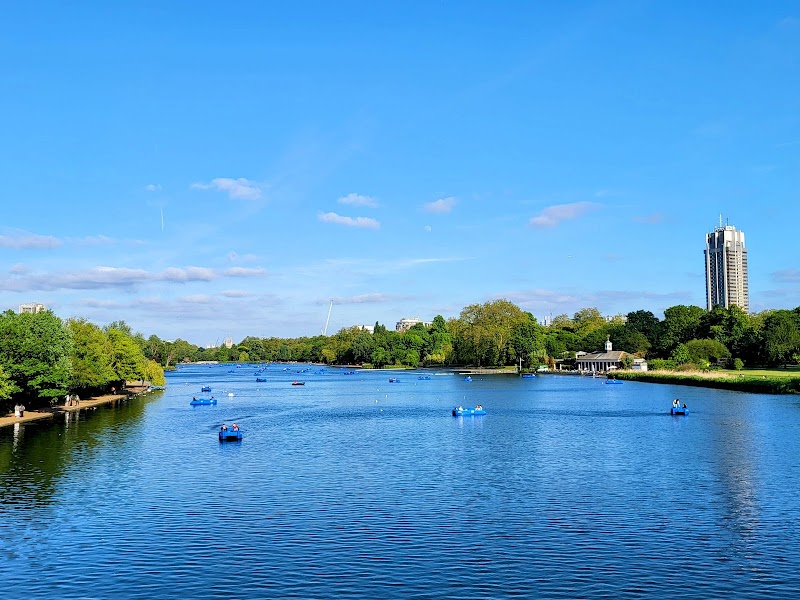
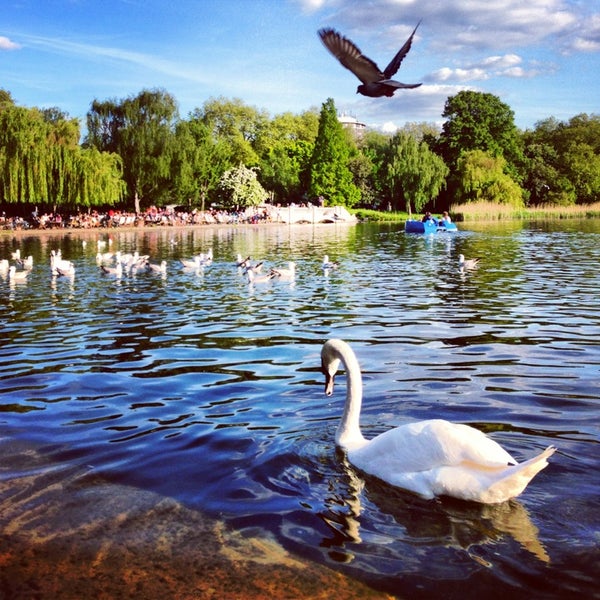
- The Serpentine — a 40-acre lake created for Queen Caroline, wife of George II, by damming the River Westbourne in the 1730s. It was among the first artificial lakes in England deliberately shaped to look natural rather than geometric, and it broke with the ruler-straight canals of the French style. Rowing boats and pedalos work the eastern half in season.
- Speakers’ Corner — the north-eastern corner, a few steps from Marble Arch and the site of the Tyburn gallows, where the condemned were allowed a last unrestricted speech. Public assembly here was formalised by the Parks Regulation Act of 1872. Karl Marx, William Morris, George Orwell and Marcus Garvey all spoke on this ground; on Sunday mornings anyone still can.
- Rotten Row — William III’s King’s Private Road, laid out in 1690 so the court could travel safely between Kensington Palace and St James’s. He hung 300 oil lamps along it, making it the first artificially lit public highway in the country. The name is a corruption of Route du Roi. It is still a sand track reserved for horses.
- Diana, Princess of Wales Memorial Fountain — an oval ring of 545 pieces of Cornish granite, cut by computer-controlled machinery, opened on 6 July 2004 to a design by the landscape architect Kathryn Gustafson. Water runs both ways around the ring, tumbling on one side and gliding on the other; visitors are invited to sit on the edge and put their feet in.
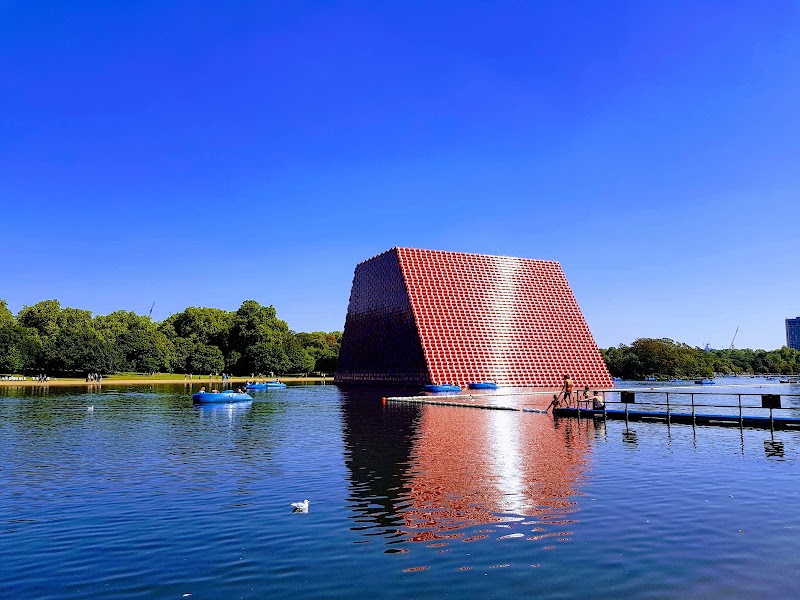
- The Serpentine Galleries — two free contemporary art spaces at the western end. Serpentine South occupies a 1930s tea pavilion; Serpentine North is The Magazine, a former gunpowder store of 1805, extended by Zaha Hadid Architects and opened in 2013. Each summer a different architect who has never built in England is commissioned to raise a temporary Pavilion beside the gallery.
- The Achilles statue — Sir Richard Westmacott’s 18-foot bronze of 1822, the nation’s tribute to the Duke of Wellington, paid for by subscription from the women of Britain and cast from French cannon captured at Salamanca, Vitoria, Toulouse and Waterloo. As the first public nude in London it caused a genuine scandal.
What you’ll find
Hyde Park is not a single designed garden but a working landscape assembled over five centuries, and it carries an unusual density of memorials, water and sport within its boundary.
- The Serpentine Lido and the Serpentine Swimming Club — the lido, on the south bank, opened in 1930 under the campaigning of George Lansbury, who wanted working Londoners to have somewhere to swim. The swimming club, founded in 1864, has open-water rights every morning of the year.
- Memorials of the twentieth century — Britain’s first Holocaust Memorial, a garden of boulders and silver birch dedicated in 1983; the 7 July Memorial of 2009, fifty-two cast stainless steel pillars, one for each person killed in the 2005 bombings; the Cavalry Memorial of 1924; and Jacob Epstein’s Rima relief of 1925, carved for the writer and naturalist W.H. Hudson.
- The Rose Garden and the Dell — the formal Rose Garden near Hyde Park Corner was laid out in 1994 by Colvin & Moggridge and combines roses with deep herbaceous planting. In the Dell, at the lake’s eastern outflow, stands a seven-tonne monolith of Cornish stone.
- The bandstand — built in 1869, moved to its present site in 1886, and by the 1890s hosting up to three concerts a week. It is one of the oldest surviving bandstands in Britain.
- Sports and play — tennis courts, football pitches, a sports centre, bowling and putting greens, marked running routes, cycle lanes, horse-riding on the sand tracks, and a playground in the northern half.
- Gates and arches — Decimus Burton’s Screen at Hyde Park Corner of 1825 and his Wellington Arch of 1828 anchor the south-east; the Queen Elizabeth Gate of 1993 stands nearby; John Nash’s Marble Arch of 1827, originally the gateway to Buckingham Palace, was moved to the north-east corner in 1851.
Things to do — and who it’s for
- Cold-water swimmers and early risers — the Serpentine is one of the very few places in central London where you can legally swim outdoors in open water, and the club’s members do it in every month of the year.
- Families with young children — flat, wide paths that take a buggy easily, a boating lake, a playground, and the Diana Memorial Fountain, which is designed to be paddled in rather than admired from a distance.
- Runners and cyclists — a full perimeter circuit of roughly seven kilometres, plus the Broad Walk and lakeside routes; dedicated cycle lanes cross the park and connect to the segregated route along the northern edge opened in 2018.
- History and politics travellers — Speakers’ Corner on a Sunday morning is a living institution rather than a plaque; the ground beneath it has hosted the Reform League riots of 1866, the suffragettes’ Women’s Sunday of 1908, and the largest political demonstrations in British history.
- Art and architecture visitors — the two Serpentine Galleries are free, change exhibitions several times a year, and the summer Pavilion is a full-scale building by a major international architect that exists for only a few months.
- Concert-goers and festival crowds — the park has been London’s biggest outdoor stage since Pink Floyd played free here in June 1968; the summer festival season and the September Radio 2 concerts now draw tens of thousands a day.
Getting there & practical
The park lies in Westminster, wedged between Mayfair, Knightsbridge, Belgravia and Bayswater, and it is ringed by Underground stations, so the practical question is which corner you want. Marble Arch and Lancaster Gate on the Central line serve the northern side and Speakers’ Corner. Hyde Park Corner and Knightsbridge, both on the Piccadilly line, put you at the southern and eastern gates and within reach of the Rose Garden. Queensway on the Central line and Bayswater on the Circle and District lines cover the north-west and the crossing into Kensington Gardens. Paddington, with the Bakerloo, Circle, District and Hammersmith & City lines plus the Elizabeth line and mainline trains, is a short walk from the north-west corner. Dozens of bus routes run along the perimeter roads, and there is a mobility buggy service inside the park during the warmer months. Entry to the park is free and always has been; the galleries are free too. Boat hire, the lido, deckchairs, tennis courts and the rides at the winter fair are charged separately. Unlike most of the Royal Parks, Hyde Park does not close at dusk — the gates are open from 5am to midnight every day of the year, whereas neighbouring Kensington Gardens does shut at dusk, with the hour moving month by month. Allow two to three hours for the park alone, and half a day if you intend to walk through into Kensington Gardens and the Italian Gardens.
When to visit
Spring is the park’s kindest season: the boating season restarts, the horse chestnuts and cherries come out, and the grass is not yet worn. Summer is the loudest and the fullest — the lido opens for general swimming, the Serpentine Pavilion goes up in June and stays until October, and the big music festivals take over the southern lawns for several weeks, which means fenced enclosures and rerouted paths on those days; if you want quiet in July, come before nine in the morning or stay north of the lake. Autumn is arguably the most beautiful: the limes and maples that replaced the 9,000 elms killed by Dutch elm disease turn hard yellow and red, the crowds evaporate, and the light across the Serpentine is at its best. Winter brings the funfair to the north-east corner from mid-November to early January, floodlit and extremely busy, while the rest of the park stays dark and empty; on Christmas morning the Serpentine Swimming Club races for the Peter Pan Cup, a 100-yard handicap in water that is often close to freezing, a tradition dating from 1864 with a trophy presented by J.M. Barrie in 1904.
Good to know
Henry VIII took the Manor of Hyde from the monks of Westminster Abbey in 1536 and kept it as a private deer chase; it stayed royal and closed for a century. James I let in a thin stream of courtiers, and in 1637 Charles I opened the gates to the general public — a decision that made Hyde Park the first royal hunting ground in England to become a genuinely common space. It has behaved like one ever since. In 1665 Londoners fleeing the Great Plague camped here. Through the eighteenth century it was the recognised duelling ground of the aristocracy, with over 170 encounters recorded, and it was notorious enough for highwaymen that Horace Walpole was robbed crossing it in 1749. Queen Caroline reshaped it in the 1730s, taking almost 300 acres to form Kensington Gardens and damming the Westbourne to make the Serpentine. The park’s most famous single episode came in 1851, when Joseph Paxton’s Crystal Palace — a prefabricated iron and glass hall built around the park’s existing elms — housed the Great Exhibition, with more than 100,000 objects from some 15,000 exhibitors and over six million visitors in five months; the building was dismantled afterwards and re-erected at Sydenham. Politics kept pace: 200,000 people protested against Sunday trading restrictions in 1855; the Reform League pulled down the railings in July 1866 in the affair that helped force the Second Reform Act; 26 June 1857 saw Queen Victoria hold the first Victoria Cross investiture here, decorating sixty-two men; and in June 1908 the suffragettes’ Women’s Sunday filled the park with a crowd reported at several hundred thousand. Modern Hyde Park has kept the same habit of gathering: free rock concerts from 1968 onwards, Queen before a crowd estimated at up to 200,000 in September 1976, Live 8 in July 2005, an open-air papal vigil in September 2010, and Olympic triathlon and open-water swimming in 2012. The park also carries its scars — an IRA bomb on 20 July 1982 killed four soldiers of the Household Cavalry and seven horses on the ride near the barracks, and the 7 July Memorial commemorates the 2005 attacks.
Visitor tips
- Speakers’ Corner only really functions on Sunday mornings; on a weekday afternoon it is an unremarkable patch of grass. Come between about 11am and 2pm on a Sunday if you want the real thing.
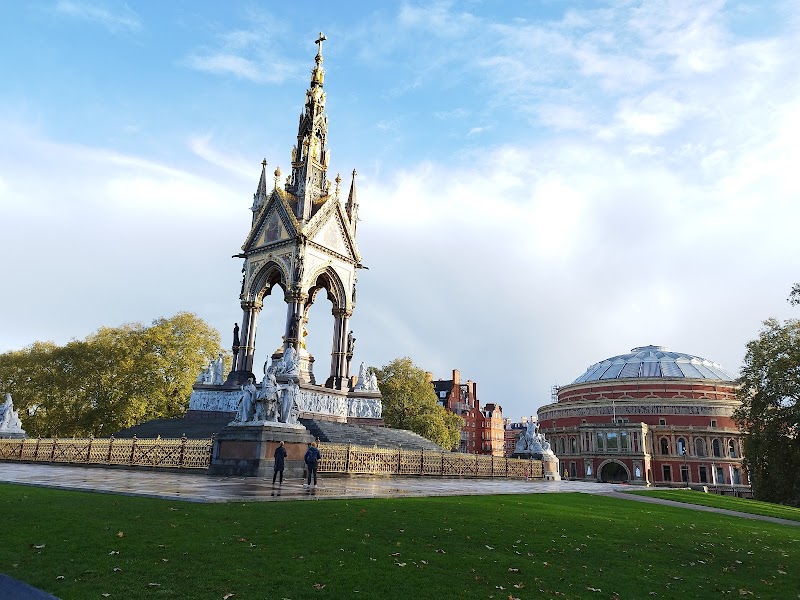
- The lake is the boundary between two very different halves. North of the water the park is busier, flatter and closer to the shops; south and west it is quieter, and the walk continues without interruption into Kensington Gardens, the Italian Gardens and the Albert Memorial.
- During the summer festival weeks, large sections of the southern half are fenced off and some gates are closed. Check what is on before planning a route across the middle of the park in late June and July.
Questions & answers
Is Hyde Park free to enter? Yes. The park has been open to the public without charge since 1637, and the two Serpentine Galleries are free as well. You pay only for optional extras — boat hire, the lido, tennis courts, deckchairs and the rides at the winter funfair.
What are the opening hours? Hyde Park is open from 5am to midnight, every day of the year. This makes it an exception among the Royal Parks, most of which close at dusk on a timetable that shifts every month. Kensington Gardens next door does close at dusk, so plan a crossing accordingly in winter.
Can you actually swim in the Serpentine? Yes, in the designated area. The Serpentine Lido on the south bank opens for public swimming in the warmer months, and the Serpentine Swimming Club has a members’ session every morning of the year, including Christmas Day. Swimming outside the marked area is not allowed.
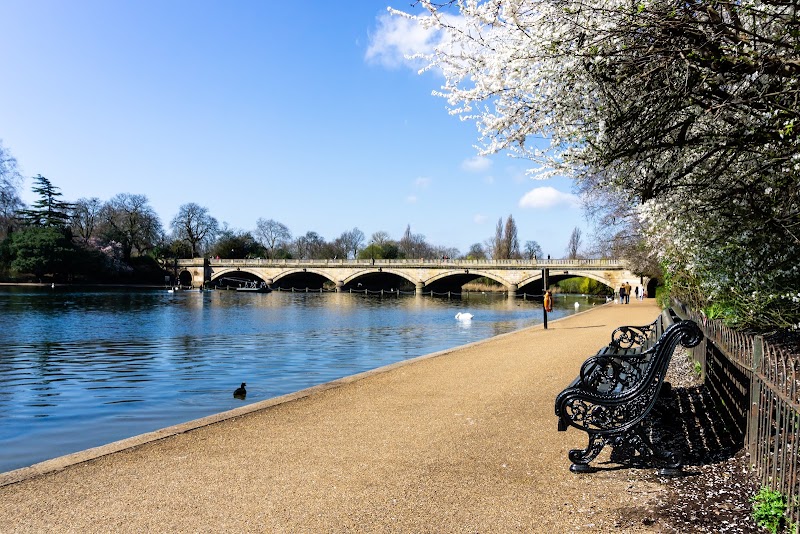
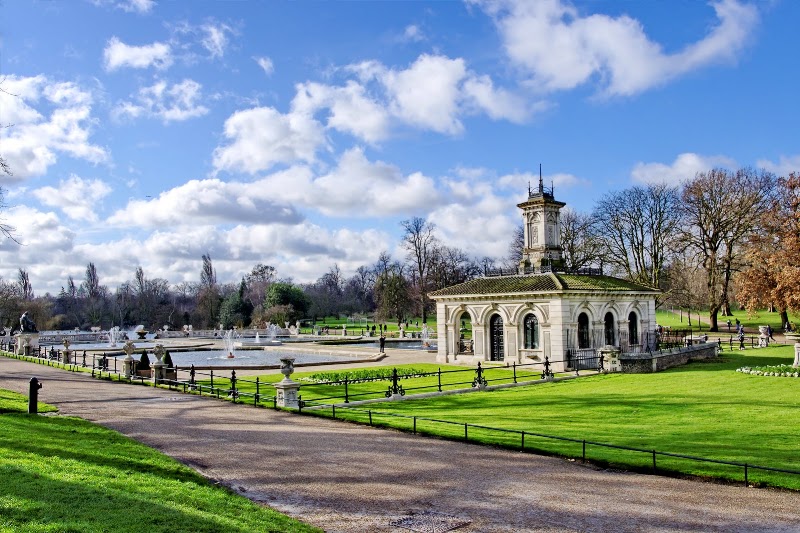
What is the difference between Hyde Park and Kensington Gardens? They were one park until Queen Caroline separated them in the 1720s and 1730s. The border runs along the carriage drive and the bridge that divides the Serpentine from the Long Water. Hyde Park is the eastern, more open and more urban half; Kensington Gardens is the western half, formally planted, with Kensington Palace, the Albert Memorial, the Italian Gardens and the Peter Pan statue.
Where exactly is Speakers’ Corner and does anyone still speak there? It is the north-eastern corner, near Marble Arch. Yes — speakers still turn up every Sunday, most of them on religion and politics, and hecklers are considered part of the format. The right to assemble here dates from the Parks Regulation Act of 1872 and grew out of the site’s proximity to the Tyburn gallows.
How long does it take to walk across? A direct crossing takes about half an hour. A loop of the perimeter is roughly seven kilometres and takes an hour and a half at a steady pace. To take in the Serpentine, the memorials, the Rose Garden and one of the galleries, allow two to three hours.
Is it worth visiting in winter? Yes, but for different reasons. From mid-November to early January the north-eastern corner holds a large Christmas funfair, which is bright, loud and crowded. The rest of the park is at its emptiest, and on Christmas morning the swimming club races for the Peter Pan Cup — a genuine spectacle for a few hundred onlookers.
Can you cycle in the park? Yes, on the designated cycle routes and the perimeter, but not across the lawns or on the pedestrian-only paths. A segregated cycle route runs along the northern edge, and the horse tracks, including Rotten Row, are for riders only.
Photos
Show 1 more photos
Visitor reviews
Reviews last updated: 2026-08-04 08:22:14
Data is refreshed monthly. Sources: londoname.com and editorial picks based on reviews.
A really lovely place to spend time with the family. But it's always crowded.
Hyde Park is one of London's Royal Parks, founded in 1536 by Henry VIII as hunting grounds. It was opened to the public in 1637. It covers about 142 hectares and is divided by the Serpentine lake. Concerts, political gat…
A great park, very big — it's hard even to walk around all of it in one go, and hard to find anything specific.
In the centre of London, a block away from the royal residence, a worldwide symbol of freedom of speech and thought.
And besides that — plenty of birds and other wildlife)
Take a stroll, sit around, deliver sharp speech…
A wonderful spot both for sport (running, swimming, cycling) and for walks. A huge park that lets you explore some different part of it each time.