

Park · London · ⭐ 9.7/10 · 11751 reviews · updated: 2026-08-04 08:22:23
Address: United Kingdom
Bushy Park — the royal deer park where D-Day was planned
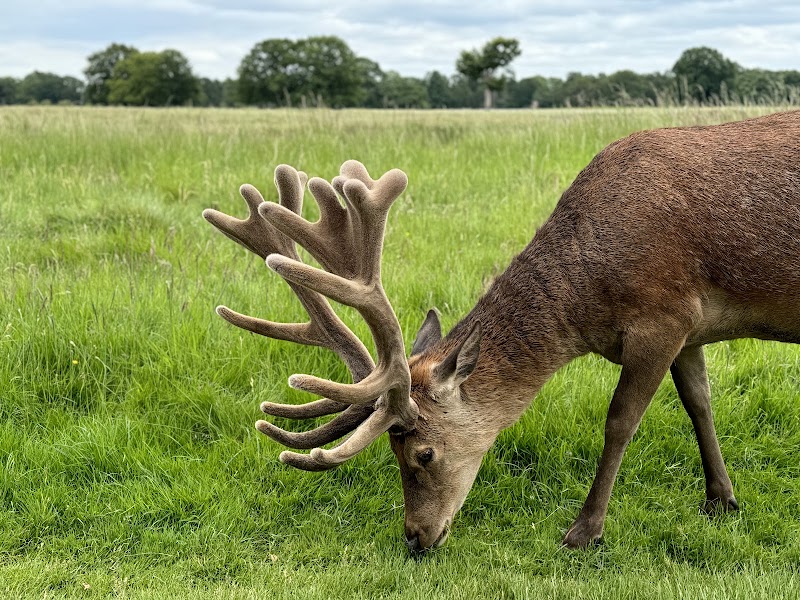
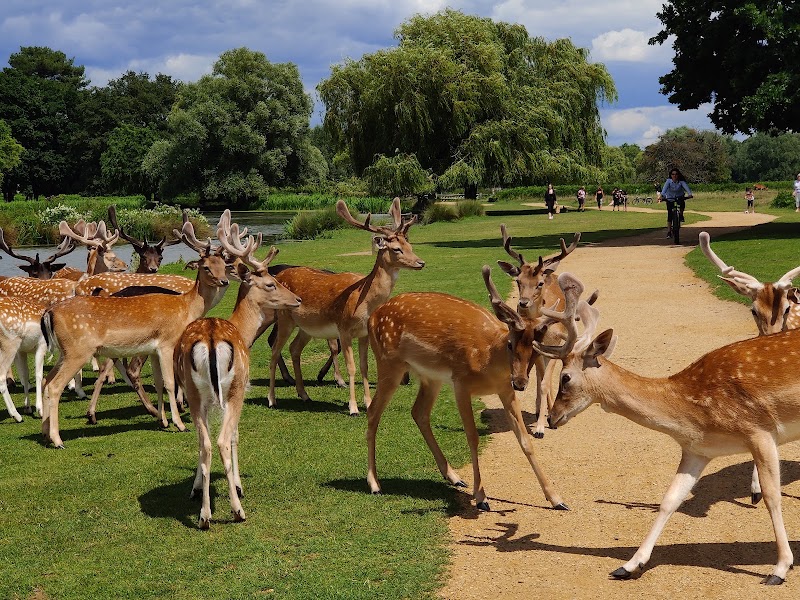
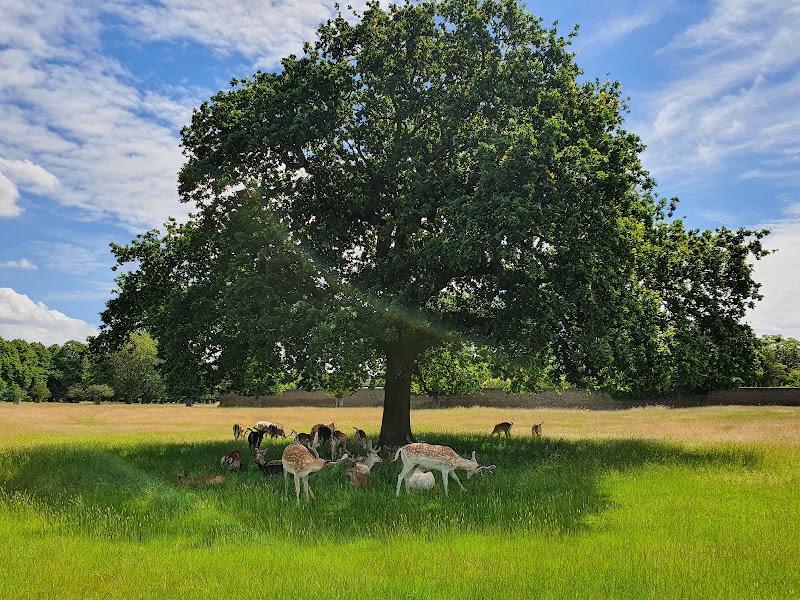
Bushy Park covers 445 hectares — over 1,100 acres — on the south-western edge of London, in the borough of Richmond upon Thames, directly beside Hampton Court Palace. It is the second largest of the Royal Parks after Richmond Park, and around 320 red and fallow deer graze it freely. This is working parkland rather than gardened landscape: acid grassland, veteran trees, protected anthills and nesting skylarks, cut through by a baroque avenue and a river that was dug by hand for a Stuart king.
Highlights
- Chestnut Avenue — a mile-long formal approach of horse chestnuts and limes, conceived by Sir Christopher Wren for William III and Mary II and completed in 1699.
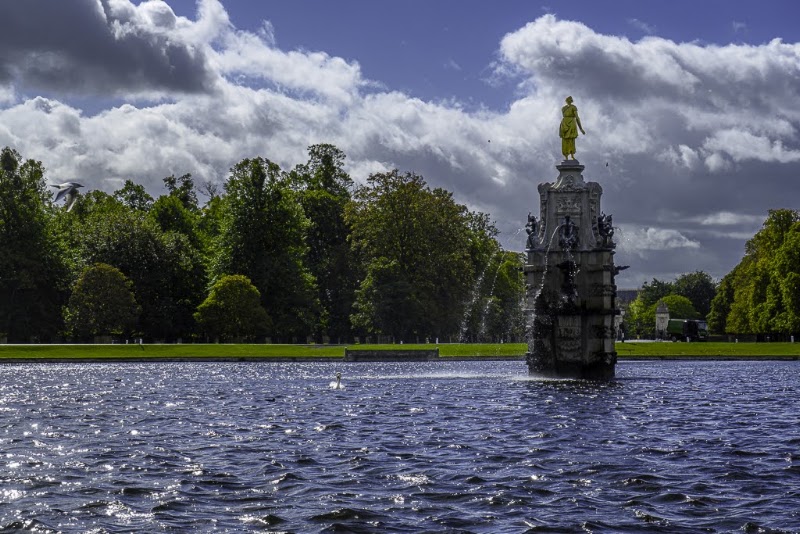
- The Diana Fountain — a bronze figure cast by Hubert Le Sueur in 1637 for Charles I’s queen, now Grade I listed and restored in 2009.
- 320 wild deer — red and fallow herds that have grazed here for roughly five centuries.
- The Longford River — a 19-kilometre artificial channel cut in 1638–39 to supply Hampton Court, still feeding the park’s ponds.
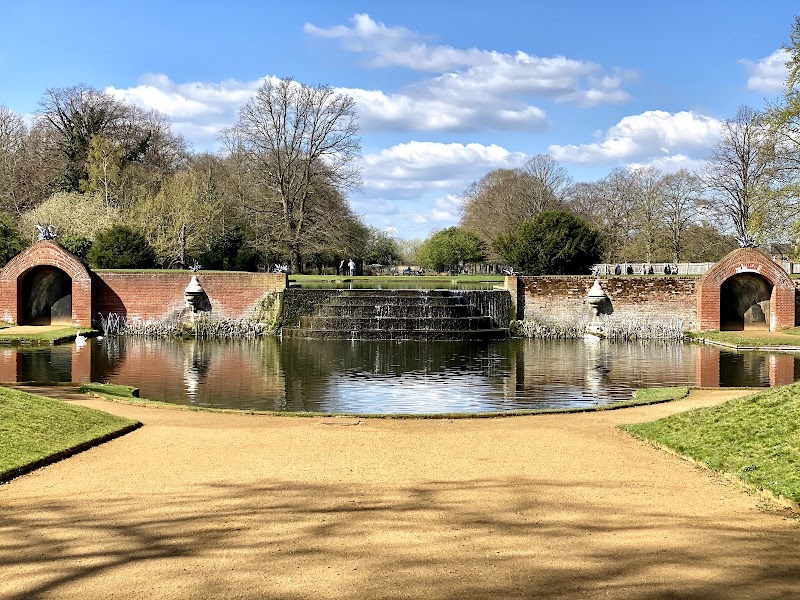
- Water Gardens and Woodland Gardens — early Georgian pleasure grounds reopened in 2009, and sheltered glades of azaleas and rhododendrons.
- The birthplace of parkrun — the world’s first event was run here on 2 October 2004 by thirteen people.
What’s inside
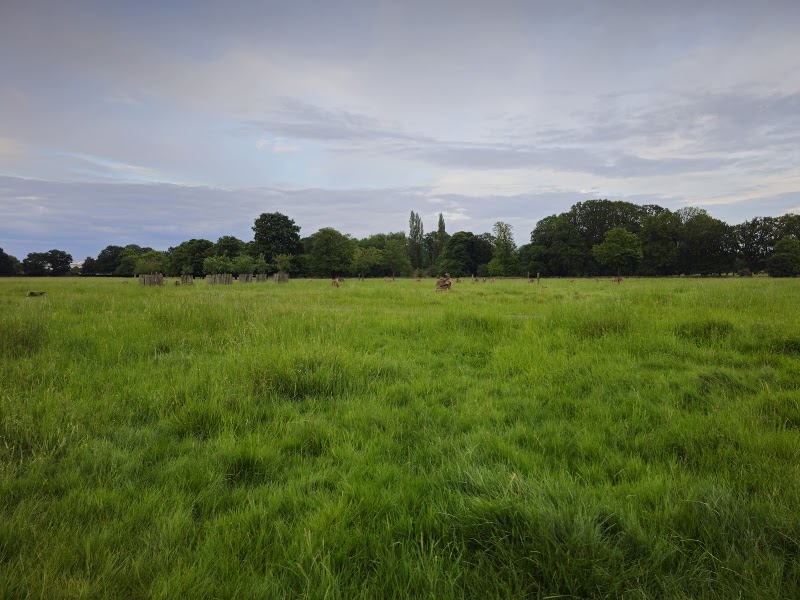
The scale is the first thing you notice: this is one of the few places in London where the horizon is grass rather than buildings.
- Open acid grassland grazed by red and fallow deer, with hundreds of protected yellow meadow ant hills.
- Chestnut Avenue running arrow-straight towards the Lion Gate of Hampton Court, with the Diana Fountain at its centre.
- Heron Pond and Leg of Mutton Pond, fed by the Longford River.
- The Woodland Gardens — enclosed, streamside plantings that come alive in late spring.
- The Upper Lodge Water Gardens, a restored eighteenth-century cascade and basin sequence.
- Ancient and veteran trees, several of them older than the formal avenue.
- Bushy House on the Teddington side, home of the National Physical Laboratory since 1900.
- The Pheasantry visitor point and café, plus memorials to the wartime camp and a Canadian totem pole raised in 1992.
What to do and who it’s for
- Wildlife watchers — deer year-round, skylarks over the grassland in spring, waterfowl on the ponds.
- Runners — the original parkrun still takes place here on Saturday mornings, and the flat ground suits long distances.
- Cyclists — miles of level route, with marked shared paths and a low speed limit on the roads through the park.
- Families — space to roam, ponds to explore and a café to retreat to when the weather turns.
- History enthusiasts — Bronze Age burial ground, Tudor deer chase, baroque waterworks and the Second World War command post in one walk.
- Dog walkers — vast open ground, but dogs must stay under close control near the herds.
Getting there and practicalities
The park lies between Teddington, Hampton Hill, Hampton and Hampton Wick, wrapped around the northern side of Hampton Court Palace. The nearest rail stations are Hampton Court, Hampton Wick, Teddington, Hampton and Fulwell; from Richmond Underground station buses run towards the park. Entry is free. Pedestrian gates stay open around the clock for most of the year, switching to a dawn-to-dusk pattern during the autumn deer management period, while vehicle gates open from about 6.30am until dusk. There is no shelter across most of the park, so plan for the weather. Two to three hours covers the main features; a full day is easy to fill.
When to visit
Chestnut Sunday, held in May, is the park’s own festival, timed to the horse chestnut blossom along the avenue — the custom dates from the nineteenth century and was revived in 1993. September and October bring the rut, when red stags roar and fallow bucks clash antlers; it is extraordinary to watch and demands real distance. May to July is the birthing season, when hinds and does hide their young in long grass. Early mornings give mist over the grassland and the calmest deer, and late spring is the peak for the Woodland Gardens.
Worth knowing
People have used this ground for 4,000 years: a Bronze Age barrow survives in the park, and a bronze dagger found here is in the British Museum. Cardinal Wolsey enclosed the land with Hampton Court in the 1520s, and Henry VIII took both after Wolsey’s fall, keeping it as a deer chase. Charles I commissioned the Longford River in 1638 at a cost of £4,000 to feed the palace waterworks. Wren laid out Chestnut Avenue under William III and Mary II, and the Diana Fountain — a figure usually identified by art historians as Arethusa rather than Diana, despite its popular name — was moved here in 1713 from Hampton Court, having started life in Inigo Jones’s river garden at Somerset House. During the First World War the Upper Lodge served as the King’s Canadian Hospital. In the Second World War the park held Camp Griffiss, where some 3,000 Allied staff worked and General Eisenhower planned the D-Day landings. The park and neighbouring Home Park were designated a Site of Special Scientific Interest in 2014.
Visitor tips
- Keep at least 50 metres from the deer at all times, and never feed, touch or photograph them at close range.
- Take extra care from May to July and again from September to October, when the animals are least predictable.
- Keep dogs on a lead near the herds; a chased deer is a dangerous deer.
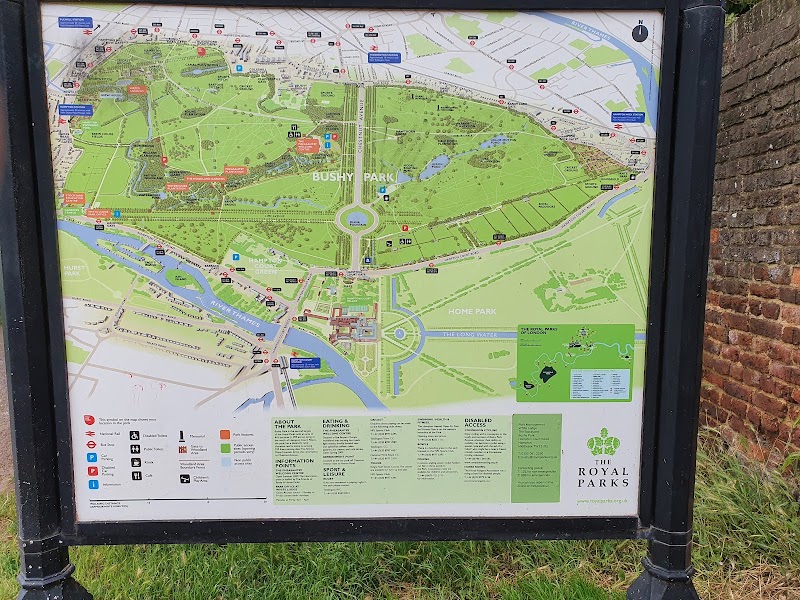
- Bring water and sturdy footwear — the ground is open, exposed and much bigger than it looks on a map.
- Come by rail rather than car on warm weekends; the car parks fill by mid-morning.
Questions and answers
Is Bushy Park free to enter? Yes, admission is free at all times.
How big is it? Around 445 hectares, over 1,100 acres — second only to Richmond Park among the Royal Parks.
How close can I get to the deer? Stay at least 50 metres away. Almost every incident on record involves someone who came closer.
Is the Diana Fountain really Diana? The name has stuck, but the bronze figure is generally identified as the nymph Arethusa. It was cast by Hubert Le Sueur in 1637 and placed in the park in 1713.
What happened here during the war? The park hosted Camp Griffiss, the Allied headquarters where Eisenhower and around 3,000 staff planned the Normandy landings.
Is it true parkrun started here? Yes — the first event, then called the Bushy Park Time Trial, was run on 2 October 2004 with thirteen runners.
Is it good for cycling? Yes, the terrain is flat and routes are long, though some paths are shared with walkers and horses.
How long should I allow? Two to three hours for the avenue, the fountain and one of the gardens; a full day to cover the park properly.
Photos
Show 1 more photos
Visitor reviews
Reviews last updated: 2026-08-04 08:22:23
Data is refreshed monthly. Sources: londoname.com and editorial picks based on reviews.
A very cosy and incredibly beautiful park.
Especially magical at sunset.
Lots of deer. Ponds with ducks. A wonderful children's playground.
You can spend a whole day here. Bear in mind that the car parks close at 19:00.
A very beautiful park, though not large, with wonderful paths where you can hide from the heat and city life. A lovely stream lined with beautiful flowers and plants. You can also grab a coffee and sit down to relax.
A wonderful place for walks with deer 🙂