

There are many objects in London that play an important role in the development and life of the city. The issue of water purification has always remained relevant for the capital of Great Britain. Therefore, there are interesting stories about the creation and development of local water treatment plants. Some of them have been in operation for many years, while others have been built recently. However, no matter how old they are, the operation of such infrastructure is based on modern technologies and traditional principles that arose a long time ago. It relates to Beckton Sewage Treatment Works. What is its history and what role does it play in the modern city? Learn more at londonname.
Prerequisites for the creation and start of operation
The history of the plant began back in 1864. In general, the impetus for the creation of such facilities was the spread of various diseases. Outbreaks of cholera, plague and typhoid were recorded throughout Europe every year. In particular, the history of London reveals a lot of large-scale epidemics, which took the lives of half of the city’s population. It took several centuries for mankind to understand the causes of the occurrence and spread of diseases. Finally, in the 19th century, scientists concluded that it was extremely important to follow the rules of sanitation and hygiene. One of the most important sources of bacteria spread was water. Thus, the construction of Beckton Sewage Treatment Works was a significant step towards overcoming that problem. The plant was a part of the project by the engineer Joseph Bazalgette. The general idea was to create two large collectors on both banks of the Thames, which had to overcome the problem of sewage disposal. However, the plant operation wasn’t similar to modern purification methods. Its main feature was the 3.8-hectare reservoirs for holding sewage for six hours. However, it didn’t lead to any purification and sewage was discharged in parts into the river during the ebb.
Further development and improvement
A rather important event for the further development of the plant was the disaster when the passenger steamer Princess Alice sank in 1878. The high death toll was caused by untreated sewage in the Thames. Therefore, a few years later, a special commission was created to check the functioning of the sewage system in the city. They came to the conclusion that solids must be separated from liquids. In 1889, the city built a purification station on the territory of the modern plant, which used iron sulphate and lime. In 1913, it treated 268 million cubic metres of waste.
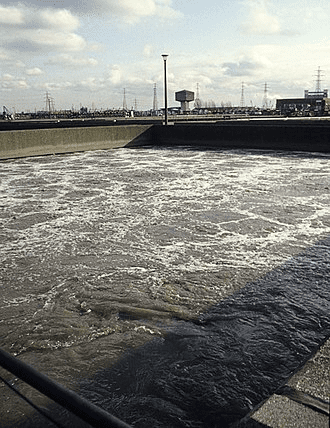
Another station was built on the territory of the plant in 1935. Its functioning was based on the principle of the Activated Sludge process. Further global improvements were made in 1959. Then the plant underwent a major £7.5 million extension. As of 1967, the water treatment plant housed aeration tanks as well as tanks for primary sedimentation and anaerobic digestion. Another modernisation took place in 2014. As a result, the plant acquired 24 tanks and three new odour removal units. Despite its good condition and normal functioning, the station continues to be improved. For example, in 2020, the city started to implement the project, which cost £123 million and had to increase the power of the plant. In general, this facility plays an important role in the life of the entire city.