

London can boast of numerous unique places with interesting history. One of these is London Zoo. It occupies a huge territory, which is home to many animals and plants. Its incredible history not only tells us about the creation and development of one of the world-oldest zoos but is also associated with a large number of global economic, social and political changes. Today, the location is one of the most popular ones in the world. Previously, the zoo had an important scientific significance. What other interesting facts do we know about this place and its development? Learn more at londonname.
The creation
The history of the zoo began when its territory was transferred to the Zoological Society of London. That organisation was created by the British chemist Sir Humphry Davy and the colonial official Sir Thomas Stamford Raffles in 1826. The main goal was to conduct scientific research there, so the place was closed to visitors for a long time. The official opening for members of the society took place in 1828. The zoo housed rare species of animals. Therefore, it was a real treasure for scientists. The zoo was opened for visitors in 1847 and is one of the oldest ones in the world. Thus, it can reveal the whole history of animal captivity and its conditions. In the first years of the zoo’s existence, workers had to take some animals to their homes in winter because they could simply die. However, a large-scale reorganisation was carried out there in 1902. As a result, the enclosures were improved and many zones were expanded to free animal movement. So, local animals got a more natural environment as well as comfortable and warm houses for wintering.
The further fate of the zoo
The following years were very successful for the zoo. From time to time, its boundaries were expanded and the captivity conditions were improved. In addition, the opening of the facility to visitors brought a good financial profit. However, negative changes came with the Second World War. London was under constant fire for a long time. This affected all spheres of local life. The zoo faced a number of difficulties too. First, the rarest and most vulnerable animals were transported to Whipsnade Zoo. Secondly, the institution was periodically forced to stop functioning. In September 1940, high-explosive bombs damaged the rodent and zebra houses, the gardener’s office and the gate. In the following year, the camel house was damaged and the local aquarium was closed for a long time. The war forced the zoo staff to make an extremely difficult decision to kill all the poisonous animals because they were frightened and broke out of their enclosures during the bombings. Thus, a zebra and a foal ran away one day. Despite all the difficulties the zoo began to develop again and was replenished with new species after the end of the Second World War. In the 1980s, London Zoo had 8,000 animals of more than 900 species. At the end of the 20th century, it was on the verge of closure due to society’s attitude towards animal captivity. However, thanks to visitors’ donations, the place continued operation. In general, London Zoo is one of the most unique and largest in the world.
Zoo’s most rare and interesting animals
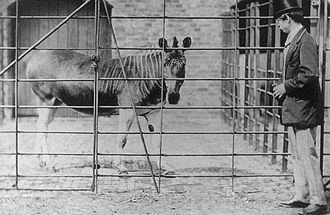
Due to the fact that the initial goal of the zoo was scientific activity, its employees tried to create the rarest collection of animals. The zoo became home to a quagga (a rare species of zebra with striped coloration only on the front part of the body). The last representative of this animal species died in Amsterdam in 1883. In 1850, London Zoo became the only place in Europe where people could see a hippopotamus for the first time since the Roman Empire. In 1932, the zoo acquired a Western Lowland Gorilla named Mok. Six years later, the animal died of Bright’s disease and its skin and skeleton were sold to Leeds City Museum. Another zoo’s famous animal was the panda Chi Chi. Having appeared there in 1958, it immediately became a local star. Panda’s death in 1972 was a tragedy not only for the employees but also for many visitors.
Zoo’s territory
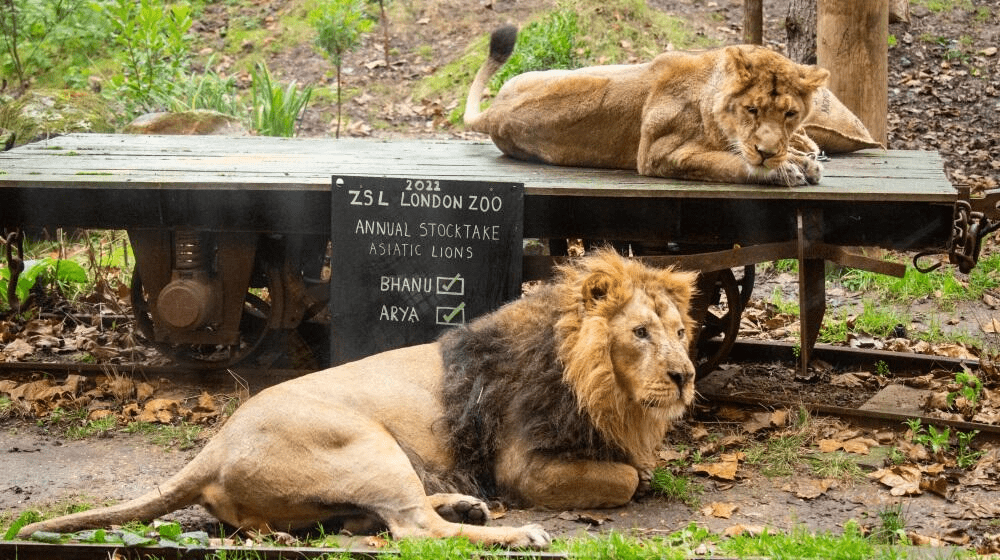
The total area of London Zoo is approximately 15 hectares. This territory is divided into separate zones of animal habitat. Here, you can also find small entertainment facilities, cafes and attractions. Many visitors are impressed by the Monkey Valley. It was built in 1965 and has an unusual appearance. It looks like a 21-metre-high pyramid-shaped aluminium frame. Land of the Lions (a zone for representatives of the feline family) was designed to recreate the Indian terrain and demonstrate the natural habitat of these animals.
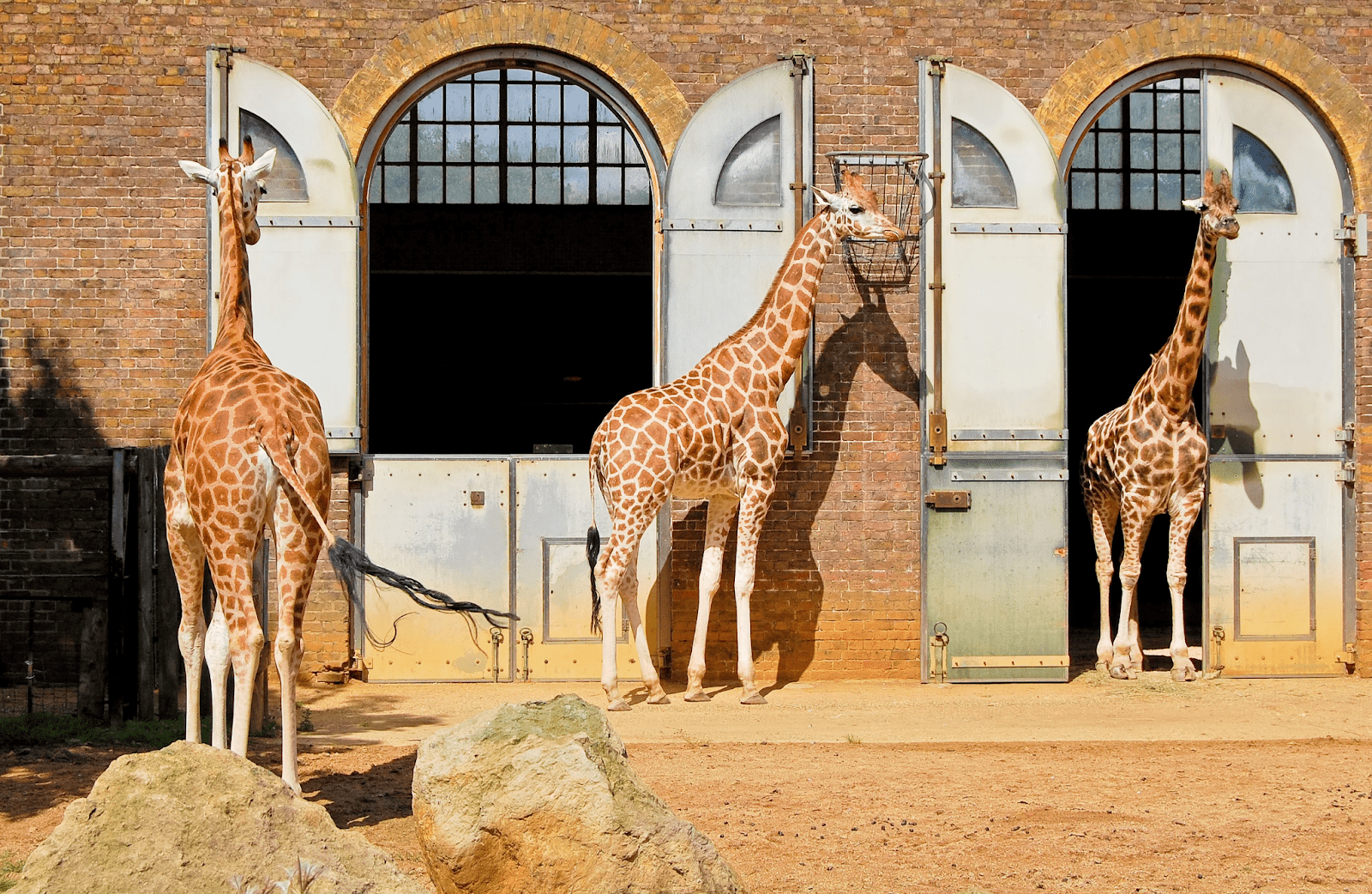
The Bird Safari zone was opened in 2005. Here, you can find many different bird species. The area dedicated to Africa and representatives of the fauna of this continent is also extremely interesting. It was opened in April 2006. One of the oldest facilities in the entire history of the zoo is the Giraffe House. It was built back in 1837 and changed its appearance significantly since then. At a high-level viewing platform, visitors can have face-to-face contact with the giraffes. The location is included in the list of cultural heritage. Zebras, warthogs, pygmy hippopotamus, African wild dogs and many other animals also live on its territory.
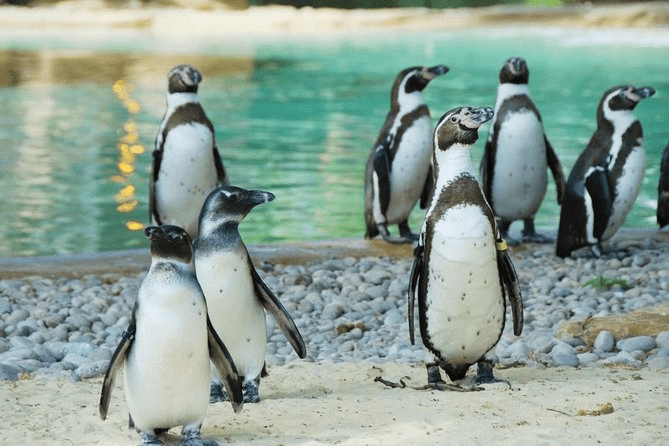
In 1913, the zoo staff made the first serious attempt to recreate a real natural environment. Thus, the place acquired an artificial rock wall made of concrete blocks. At various times, this area housed kangaroos, bears, leopards, goats, wild boars and penguins. Nowadays, this zone is dedicated to Australia. Therefore, you can find Red-necked wallabies and emus living there. Another popular zone is Reptile House, which was opened in 1927. There are various types of crocodiles, turtles, lizards, vipers, boa constrictors and others. Interestingly, one of the most popular scenes of the Harry Potter and the Philosopher’s Stone movie was filmed in this very place. In 2012, the area was renovated. Thus, a new Amphibian Wing was created there. In 2011, Penguin Beach appeared on the zoo territory too.
All over the world, zoos are considered a place for children’s entertainment. Therefore, London Zoo tried to create a favourable and comfortable atmosphere for young visitors and thus made a zone that is fully dedicated to them. Its opening took place in 2009 thanks to the funding of parents whose children loved to visit the zoo but unfortunately died of cancer. There are playgrounds, a fountain and many domestic animals. Children can enjoy spending time with goats, alpacas and llamas. In general, this is only a small part of what can be found at London Zoo.