

Park · London · ⭐ 9.7/10 · 50474 reviews · updated: 2026-08-04 08:22:16
Address: London SE10 8QY, United Kingdom
Greenwich Park — the hill where the world’s clock starts
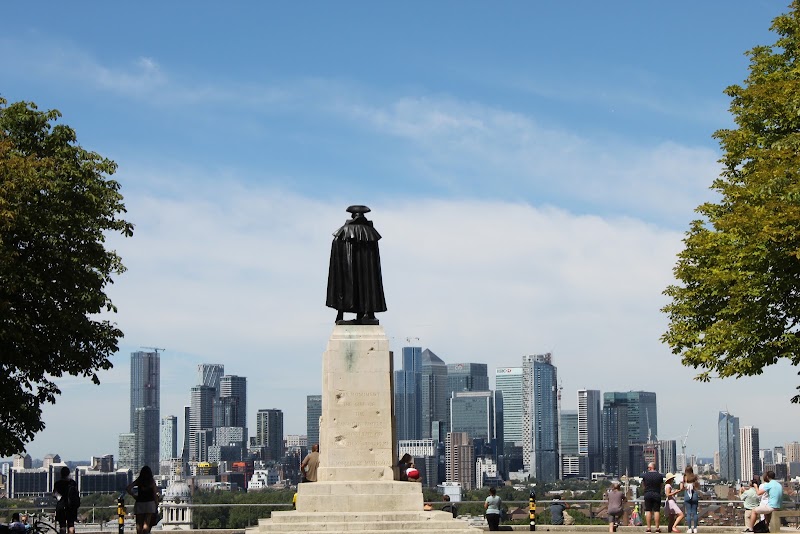
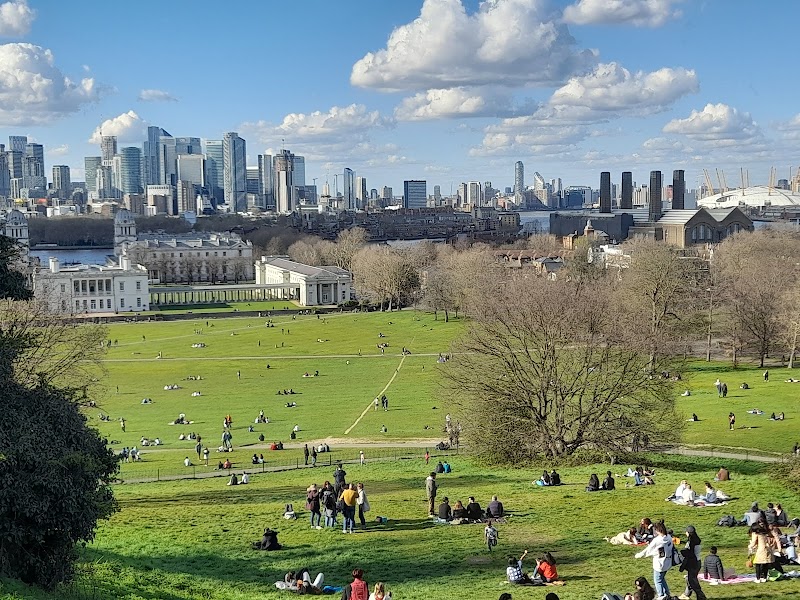
This is the oldest enclosed Royal Park, walled in 1433, and the only one that gave its name to a global standard. From the top of its hill you look down a steep grass slope over the Queen’s House and Wren’s twin domes to the river, Canary Wharf and the City beyond — a view that has been painted since the seventeenth century and is now legally protected. Beneath your feet runs the Prime Meridian, longitude zero, the line the world agreed on in 1884 and by which every clock and every navigation system still measures. Around that single fact the park has accumulated a Roman temple, Anglo-Saxon burial mounds, a Tudor palace site, terraces laid out for Charles II, a herd of deer and a restored seventeenth-century landscape.
Highlights
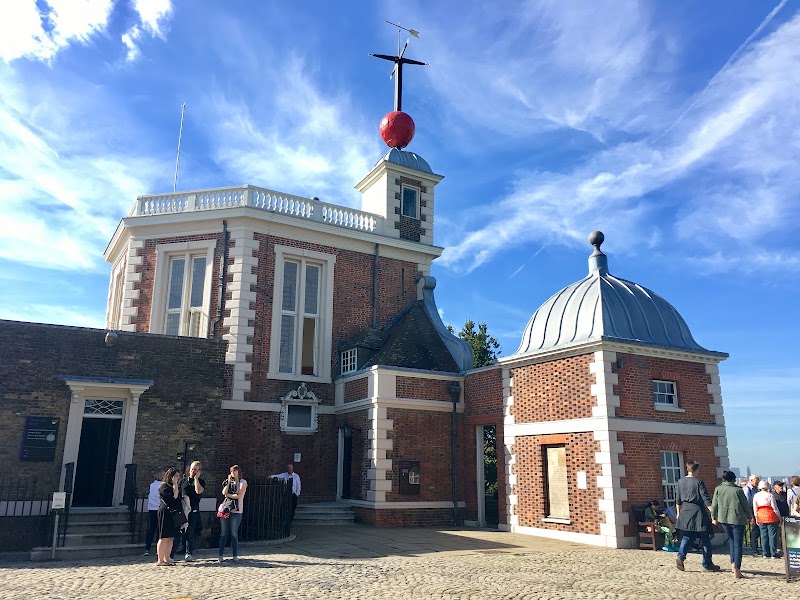
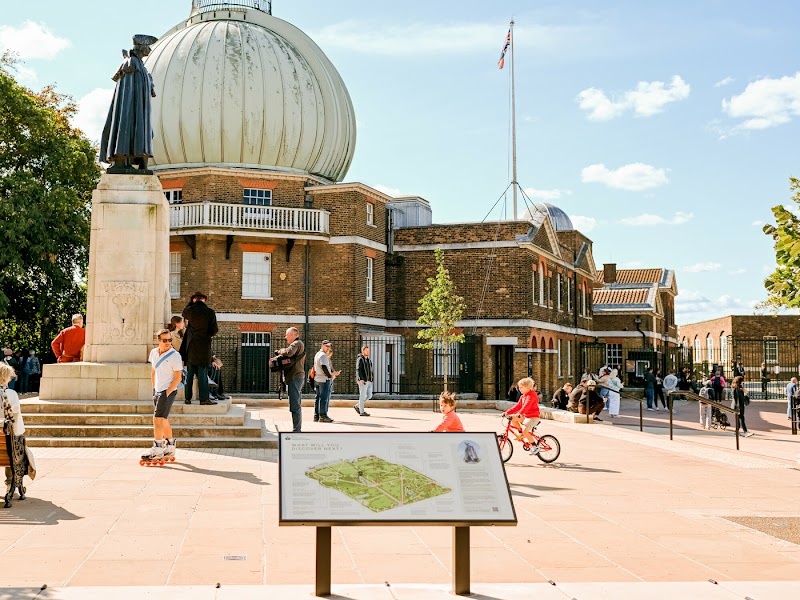
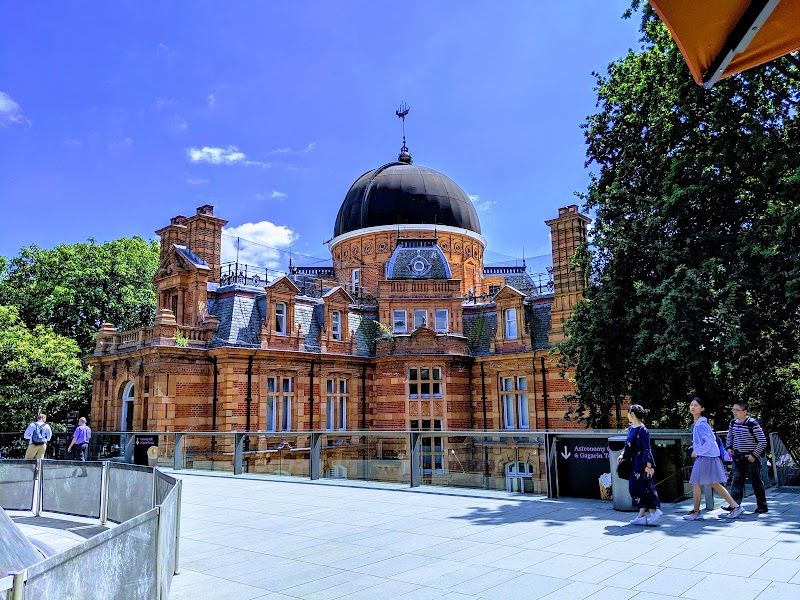
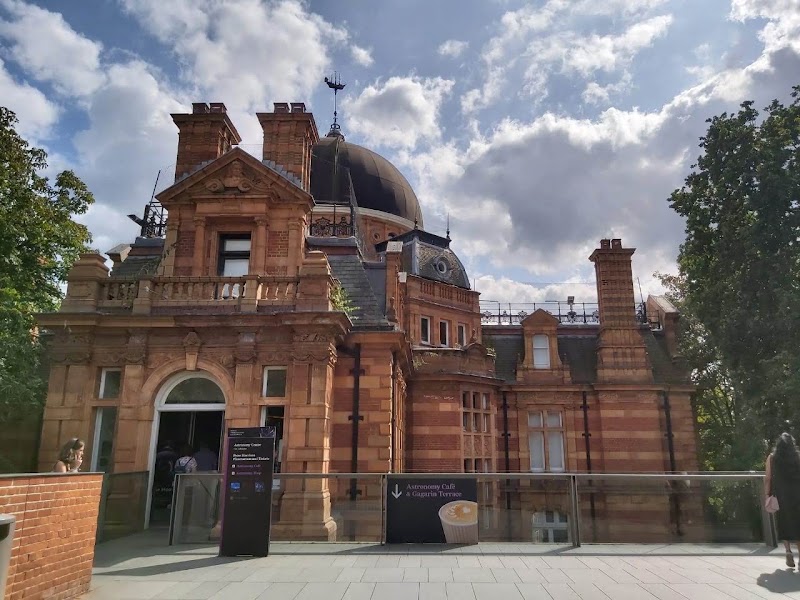
- The Royal Observatory and the Prime Meridian — founded in 1675 on the advice of Sir Christopher Wren, who also designed Flamsteed House on the site of the old Greenwich Castle. John Flamsteed was appointed the first Astronomer Royal in the same year, charged with fixing the stars accurately enough to solve longitude at sea. The International Meridian Conference in Washington in October 1884 adopted the Greenwich meridian as the world’s zero; modern satellite geodesy puts true zero about 102 metres to the east, which is why GPS and the brass line disagree.
- The time ball — a red ball on the Observatory’s turret that has risen and dropped at exactly one o’clock every day since 1833, so that ships on the river could set their chronometers. It was one of the world’s first public time signals and it still works.
- The Grand Ascent and the Giant Steps — enormous grass terraces cut into the hillside in the 1660s as part of a baroque design commissioned by Charles II from André Le Nôtre, the landscape architect of Versailles. Erosion had almost erased them; they were rebuilt and re-turfed during the recent four-year restoration and are once again the park’s defining piece of geometry.
- The deer of The Wilderness — deer have been here since Henry VIII introduced them in the sixteenth century and roamed loose until 1927. The herd was moved to Richmond Park in 2021 while construction went on; eight fallow deer returned in spring 2025 to an enlarged and improved paddock with new access to woodland and wildflower planting.
- The Queen’s House — begun in 1616 by Inigo Jones for Anne of Denmark and finished in 1635 for Henrietta Maria, the first fully classical building in England and the model for two centuries of British architecture. It is a free public gallery, home of the Armada Portrait of Elizabeth I and the spiral Tulip Stairs.
- The ancient dead — the remains of a Romano-Celtic temple, first excavated in 1902, and a cluster of roughly thirty Anglo-Saxon burial mounds in the wooded eastern section, among the largest such groups in Greater London.
What you’ll find
The park is a hill with a flat top, dropping sharply on its northern side. That single fact organises everything: the formal ground and the gardens sit up on the plateau, the great view is over the northern edge, and the historic buildings stand at the bottom.
- The Flower Garden and the gardens beside it — the park’s most intensively planted area, with a rose garden by the Ranger’s House, a herb garden and The Queen’s Orchard, a restored walled kitchen garden of heritage fruit varieties.
- The great avenues — seventeenth-century sweet chestnuts with deeply spiralling bark line the main axis across the plateau, and a separate cherry avenue turns the park pink for about two weeks each spring.
- The Old Royal Naval College below the park — Wren’s masterpiece, begun in 1696 as the Royal Hospital for Seamen, with the Painted Hall decorated by Sir James Thornhill between 1707 and 1726. It stands on the site of the Palace of Placentia, the Tudor palace where Henry VIII, Mary I and Elizabeth I were all born.
- The Ranger’s House — an elegant Georgian villa of the 1720s on the south-western edge, now holding the Wernher Collection of medieval and Renaissance art.
- Monuments and trees — the bronze of General Wolfe, victor and casualty at Quebec in 1759, given by the people of Canada and unveiled in 1930; Queen Caroline’s Bath, a sunken plunge bath of about 1806; and the stump of Queen Elizabeth’s Oak, a hollow tree associated with the Tudors that finally fell in 1991, with a replacement planted beside it.
- Everyday facilities — a boating lake and duck pond, tennis courts, a cricket pitch, a bandstand, a playground in the north-eastern corner, several cafés including the Ignatius Sancho Café opened in 2024, and a new Learning Centre with a dipping pond, wildflower meadow and nature trails.
Things to do — and who it’s for
- Anyone who wants the definitive London view — the panorama from the Observatory terrace across the Queen’s House to the river and the towers is the classic sightline of the whole city and costs nothing.
- Science and history travellers — standing on longitude zero, watching the time ball drop at one o’clock and seeing Harrison’s marine chronometers is a single coherent story about how humans learned to know where they are.
- Families — deer to look for, a boating lake, a large playground, wide open grass for running, and a Learning Centre built specifically for children’s outdoor discovery.
- Walkers and runners — a genuine hill, unusual within London, with paths for a hard climb or a long circuit; the London Marathon’s red start assembles just beyond the park’s southern edge each spring.
- Gardeners and plant people — the Flower Garden, the rose and herb gardens and the restored orchard give the park more horticultural substance than its size suggests.
- Architecture visitors — Inigo Jones, Christopher Wren, Nicholas Hawksmoor and James Thornhill are all represented within a few hundred metres, which is why the whole ensemble was inscribed as the Maritime Greenwich World Heritage Site in 1997.
Getting there & practical
The park sits in the Royal Borough of Greenwich, in south-east London, on the south bank of the Thames, with the town centre at its northern foot and Blackheath immediately beyond its southern wall. The Docklands Light Railway station called Cutty Sark for Maritime Greenwich is the closest to the northern gates and the Old Royal Naval College. Greenwich station is served by both the DLR and Southeastern trains from central London. Maze Hill station, also on the Southeastern line, is the nearest to the eastern side and the playground, while Blackheath station puts you at the top of the hill so you can walk down through the park rather than up. Uber Boat by Thames Clippers river services call at Greenwich Pier, which is easily the most enjoyable approach and gives you the whole waterfront on the way in. Local bus routes serve Greenwich town centre and Blackheath. Entry to the park is free. The Royal Observatory’s meridian courtyard and its astronomy galleries are ticketed, as is the Ranger’s House; the Queen’s House and the National Maritime Museum are free, and the Painted Hall is separately ticketed. The pedestrian gates open at 6am and vehicle gates at 7am, but closing time moves through the year with the light — as late as nine in the evening at midsummer and much earlier in the winter months — so check before planning a late walk. Allow two hours for the park and the view, and a full day if you add the Observatory, the Queen’s House and the Naval College.
When to visit
Spring is the park’s signature season, because of the cherry avenue: for roughly a fortnight, usually late March into April, the blossom draws serious crowds and the queues for photographs are real, so early morning is the only sensible time. Summer gives long evenings on the hill, the boating lake in use, the Flower Garden at full strength and the greatest number of visitors; the plateau catches the wind even in August, so bring a layer for the top. Autumn is the connoisseur’s choice — the sweet chestnuts and the avenues turn, the light across the river gets low and dramatic by four in the afternoon, and the hill empties out. Winter is bare but strategically excellent: the leafless trees open up sightlines that summer hides, frost sits on the Grand Ascent, and the early sunset over Canary Wharf from the Observatory terrace is spectacular. One note on the deer: unlike the free-roaming herds of Richmond and Bushy Park, where the autumn rut is a genuine safety matter and visitors are told to keep well back, Greenwich’s deer live inside a fenced paddock in The Wilderness. You watch them from outside the fence, so there is no rutting-season restriction here — but do keep dogs under control along that boundary.
Good to know
The estate belonged to the Abbey of St Peter in Ghent before it reverted to the Crown in 1427. In 1433 Henry VI granted it to his uncle Humphrey, Duke of Gloucester, who enclosed it — making this the first of the Royal Parks to be walled — and built both a riverside mansion called Bella Court and a watchtower on the hilltop that later became Greenwich Castle. Under the Tudors the riverside house became the Palace of Placentia and the dynasty’s favourite residence: Henry VIII was born there in 1491, Mary I in 1516 and Elizabeth I in 1533. Henry stocked the park with deer for hunting, and they roamed free for four centuries, until 1927. James I walled the whole park in brick — a barrier roughly two miles long and twelve feet high, much of which still stands — and had an ice house built in 1619, among the first in England. His queen, Anne of Denmark, commissioned Inigo Jones to design the Queen’s House in 1616; it was completed for Charles I’s queen, Henrietta Maria, in 1635, and it introduced Italian classicism to English building. After the Restoration, Charles II set out to make Greenwich a baroque showpiece and in 1661 commissioned André Le Nôtre, then remaking the gardens of Versailles, to design the layout. Le Nôtre almost certainly never visited; his plan was executed only in part, but the giant grass terraces of the Grand Ascent came from it, and so did the great avenues. In 1675 the king founded the Royal Observatory on Wren’s advice, and appointed John Flamsteed as the first Astronomer Royal, with the explicit task of mapping the heavens accurately enough to let sailors find their longitude. That work, continued through John Harrison’s marine chronometers, made Greenwich the reference point for maritime navigation, and by 1884 so many of the world’s charts already used it that the International Meridian Conference simply confirmed the fact. Meanwhile the Palace of Placentia had fallen into ruin and was replaced from 1696 by Wren’s Royal Hospital for Seamen, later the Royal Naval College. In the twentieth and twenty-first centuries the park stayed in use: it hosted the equestrian events and modern pentathlon of the 2012 Olympic Games, and between 2021 and 2025 it underwent the largest restoration in its modern history, funded with National Lottery heritage money, which rebuilt the eroded Grand Ascent, restored the Flower Garden, ran archaeological excavations across the site, enlarged the deer paddock and built a new Learning Centre for schools.
Visitor tips
- Arrive by train at Blackheath and walk downhill through the park to the river. You get the great view as a reveal rather than as a climb, and you finish beside the cafés and the boats instead of halfway up a slope.
- The time ball drops at exactly 1pm every day and is free to watch from the terrace outside the Observatory — you do not need a ticket for that, only for the meridian courtyard and the galleries.
- The cherry blossom fortnight in spring is genuinely crowded from mid-morning onwards. If you want the avenue without a queue, be there within an hour of the gates opening.
Questions & answers
Is the park free? What costs money? The park itself is free at all times. The Royal Observatory, including the meridian line courtyard and the astronomy galleries, is a ticketed attraction, as is the Ranger’s House and the Painted Hall at the Old Royal Naval College. The Queen’s House and the National Maritime Museum, both at the foot of the hill, are free.
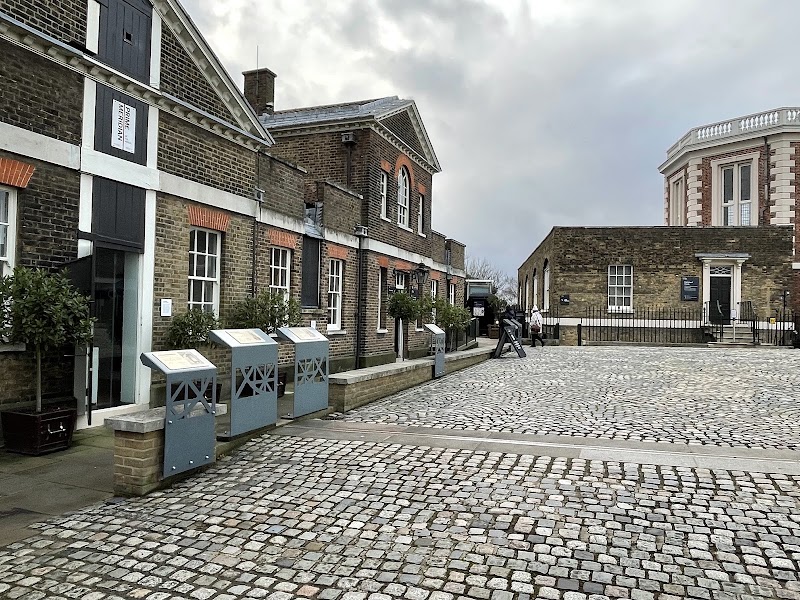
Can I stand on the Prime Meridian without paying? The famous brass line in the Observatory courtyard is inside the ticketed area. However, the meridian continues north and south across the park, marked at points on the ground outside, and modern satellite positioning actually places longitude zero about 102 metres east of the brass line — so with a phone you can stand on true zero for nothing.
Are there really deer, and can I get close to them? Yes. Eight fallow deer returned in spring 2025 after a four-year absence, and they live in a fenced paddock called The Wilderness with woodland access. You view them from outside the enclosure. This is different from Richmond and Bushy Park, where the deer roam free and the autumn rut brings real safety warnings.
What are the opening hours? Pedestrian gates open at 6am and vehicle gates at 7am. Closing time changes month by month with the daylight, running as late as nine in the evening around midsummer and considerably earlier in winter, so check the current time before an evening visit.
How steep is it and is it manageable with a pushchair or limited mobility? The hill is genuinely steep on its northern face and the climb to the Observatory is hard work. The plateau at the top, where the gardens, the avenues and the deer paddock are, is flat and easy. Approaching from the southern side means arriving on the level, which is far kinder.
Why is Greenwich the world’s zero for longitude? Because so much of world shipping already used charts based on the Royal Observatory’s tables. When forty-one delegates from twenty-five nations met at the International Meridian Conference in Washington in October 1884, they were largely ratifying existing practice. The decision also set the basis for Greenwich Mean Time and for global time zones.
How long do I need here? Two hours covers the park, the hill and the view. Half a day lets you add the Observatory. A full day is realistic if you include the Queen’s House, the National Maritime Museum and the Old Royal Naval College at the bottom, all of which are within a few minutes’ walk of the northern gates.
What is the best way to arrive? By river. The Thames Clippers service to Greenwich Pier gives you the approach the Tudors used, with the whole waterfront and Wren’s colonnades opening up ahead of you. The DLR station Cutty Sark for Maritime Greenwich is the fastest option, and arriving at Blackheath lets you walk downhill.
Photos
Show 1 more photos
Visitor reviews
Reviews last updated: 2026-08-04 08:22:16
Data is refreshed monthly. Sources: londoname.com and editorial picks based on reviews.
A very beautiful park. There are both very well-tended areas and spots that are a little wild, overgrown with wild blackberry. There are also small hills that add even more charm to the park.
I really love this park!! Cosy, large, beautiful trees, flowers and a super view
A beautiful park, especially at sunset.
Extraordinarily impressed — the best panorama of the city, the zero meridian, the Royal Observatory, be sure to visit.
A large, beautiful park with an observatory. There's plenty of space in the park itself, so you can come and play with your dog or have a picnic with friends/family. If you climb the hill up to the observatory, there's a…