

The UK’s capital boasts numerous programmes that foster the city’s development in various fields, with significant attention given to environmental protection. Considering London’s rapid growth, dense construction, and the thousands of tourists it welcomes daily, preserving green spaces is essential. The city’s authorities are actively developing relevant projects and taking residents’ initiatives into account. A crucial part of these programmes is woodland protection. These areas serve as vital habitats for many species and are truly the city’s lungs. So, what do these conservation programmes entail, and what are their key features? More on this at londoname.
A Widespread Commitment to the Environment
One of the most well-known government initiatives is the London Environment Strategy, which addresses environmental issues and climate change. It covers a whole range of areas where projects are developed and challenges are overcome. These broad categories include improving air quality, creating green spaces, and tackling the capital’s environmental problems. Within this framework, a large number of projects have been established since 2016. When it comes to preserving and protecting green spaces, the Greener City Fund is a notable example, though it faced challenges during the global pandemic. A more recent and exciting initiative is the Green Roots Fund. This fund allows community groups to apply for support to make their neighbourhoods more climate-resilient, cleaner, and richer in nature. The Rewild London Fund also helps bring original and ecological ideas to life. As part of the main strategy, it supports projects focused on conserving wildlife within the city.
The Urban Forest
London is home to one of the largest urban forests in the world. It’s also worth noting that this classification includes every tree within the city’s territory, even those in private gardens, rather than referring to a single green zone. In total, the UK capital has 8.4 million trees. It’s clear that Londoners care for these trees and strive to protect them, as a fifth of the city’s urban forest is located in private gardens. Nevertheless, various tree conservation initiatives also come from the city’s government. The aforementioned London Environment Strategy, for instance, includes a target to increase tree canopy cover by 10 percent and create at least 200 hectares of new woodland by 2050.
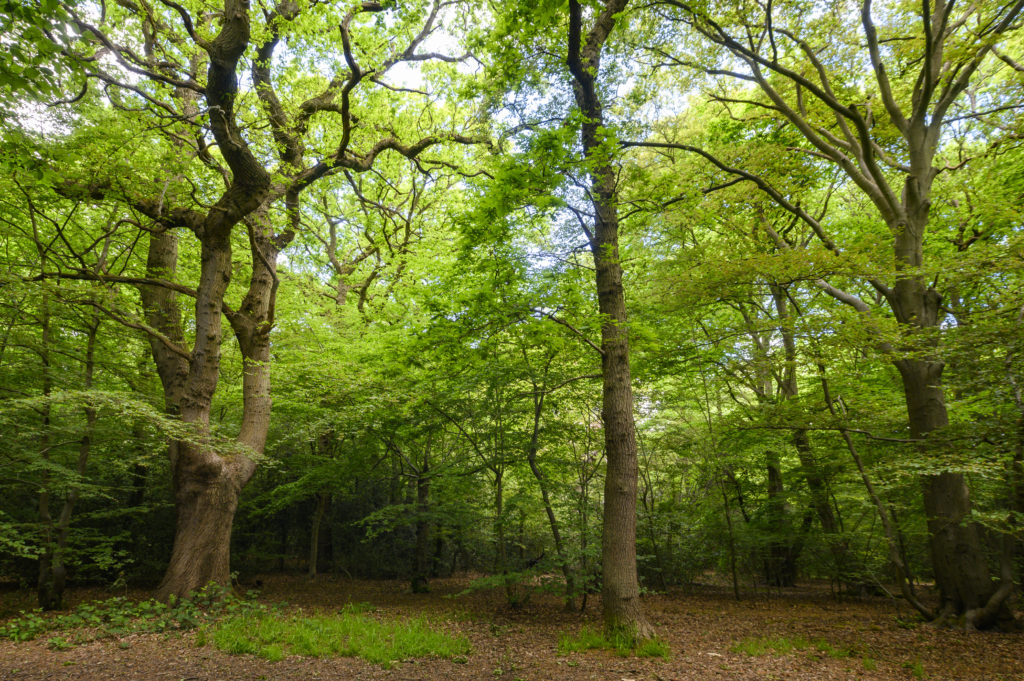
The need to preserve and protect the forest has prompted the creation of several special funds. For example, the Mayor allocated £1.2 million from the Greener City Fund to create several woodland areas. This notably included a project in the London Borough of Enfield to restore the former wooded landscapes of Enfield Chase. Funding was also provided to the London Borough of Havering, with plans not only to expand the forest but also to create a wildlife corridor between it and a country park. In total, these programmes led to the planting of 120,000 trees between 2020 and 2022. For the further expansion of woodland in Enfield Chase, the government secured funding from the Green and Resilient Spaces Fund.
The London Urban Forest Resource Hub plays a major role in this field. It conducts essential research and provides recommendations for woodland management. The hub’s work is aligned with the three main goals of the London Urban Forest Plan: Protect and Manage, Develop and Expand, and Promote and Support. All these objectives are geared towards managing projects, data, public engagement strategies, and funding opportunities.