

Park · London · ⭐ 9.7/10 · 31302 reviews · updated: 2026-08-04 08:22:18
Address: Richmond, United Kingdom
Richmond Park — a royal hunting ground that became London’s wildest landscape
Step through any gate in the long brick wall and the city stops mid-sentence. Ahead lie bracken slopes, hollow oaks older than the British Empire, and herds of red and fallow deer that have grazed this ground without a break since the reign of Charles I. This is the largest of London’s Royal Parks — well over 2,000 acres of acid grassland, ancient woodland and open water held inside the boundary of a capital city — and the only one where the landscape, rather than the gardener, sets the terms.
Highlights
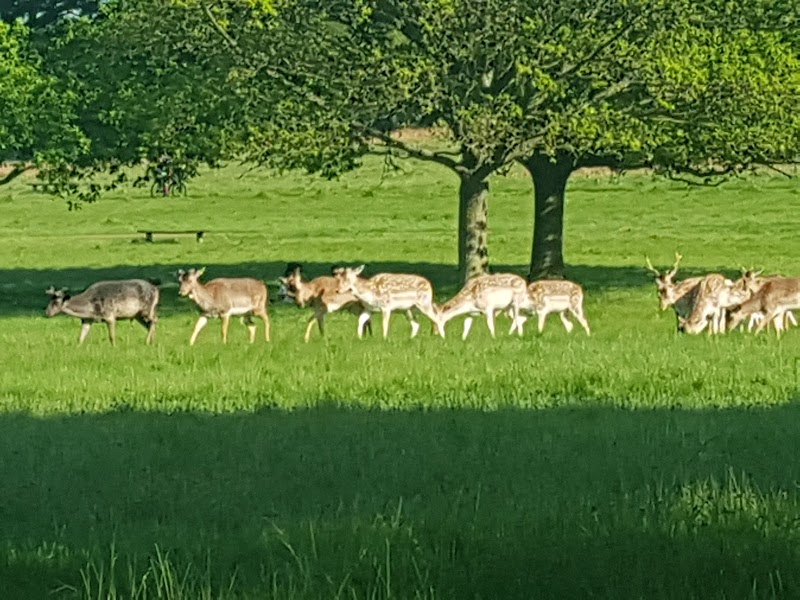
- The free-roaming deer herds — around 600 red and fallow deer live loose across the whole park, descended from stock enclosed here in 1637. They are genuinely wild animals rather than livestock, and the park’s calendar is built around their year.
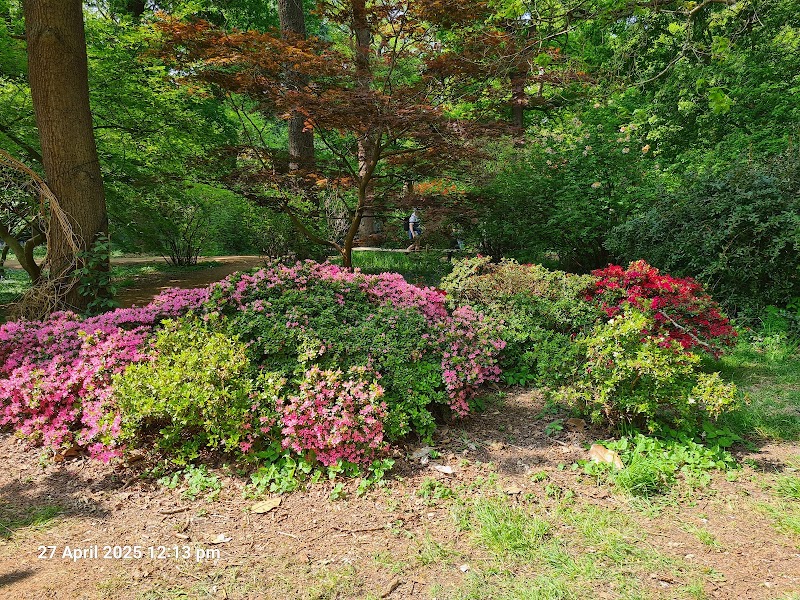
- Isabella Plantation — a woodland garden of some forty acres, fenced against the deer and managed organically since the 1950s, celebrated for evergreen Kurume azaleas that turn the streamsides into solid walls of colour in late April and May.
- King Henry’s Mound — an ancient mound, possibly a Neolithic barrow and formally listed by Historic England in 2020, fitted with a telescope trained through a cut gap in the trees on the dome of St Paul’s Cathedral ten miles east.
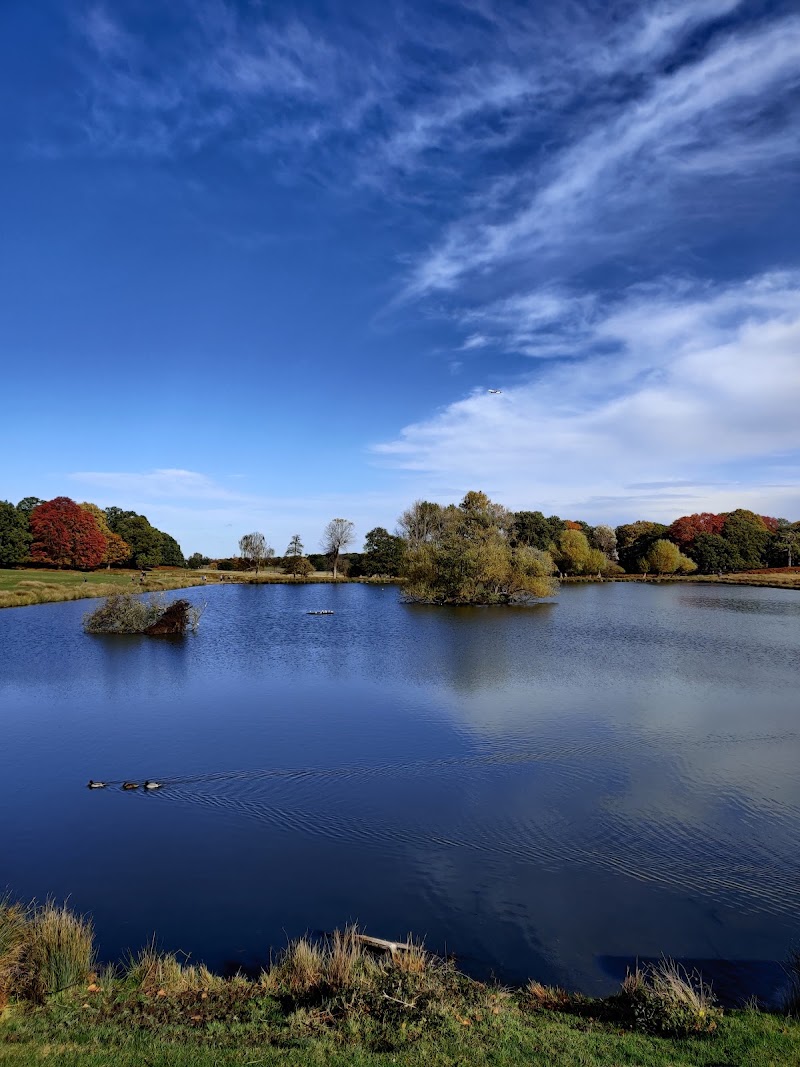
- Pen Ponds — two linked sheets of water dug in 1746 and originally called the Canals, separated by a causeway that is the finest place in the park for herons, great crested grebes and winter wildfowl.
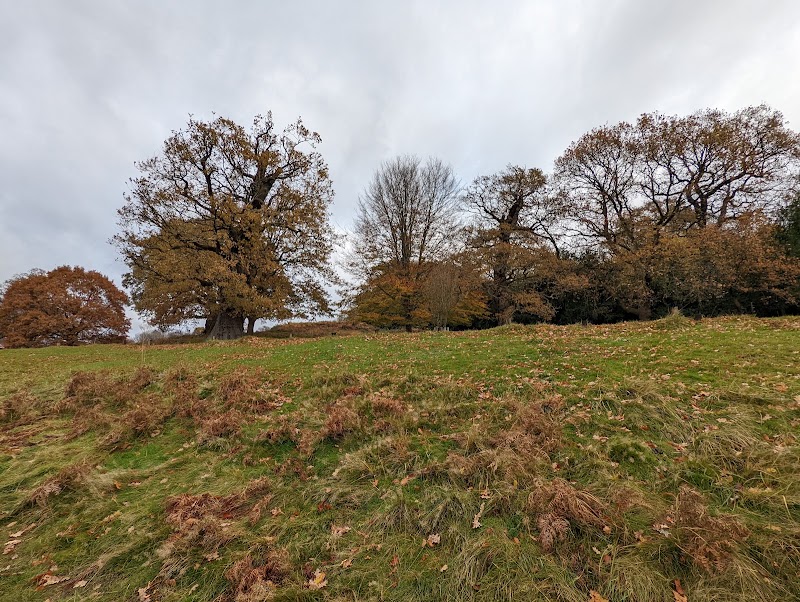
- The veteran oaks — roughly 1,300 veteran trees are recorded here and about 320 of them count as genuinely ancient, some hollow, some propped on their own fallen limbs; their rotting heartwood is habitat of European importance.
- Pembroke Lodge — a Georgian house on the western ridge with tea rooms and a terrace looking out across the Thames valley, where the philosopher Bertrand Russell spent his childhood.
What you’ll find
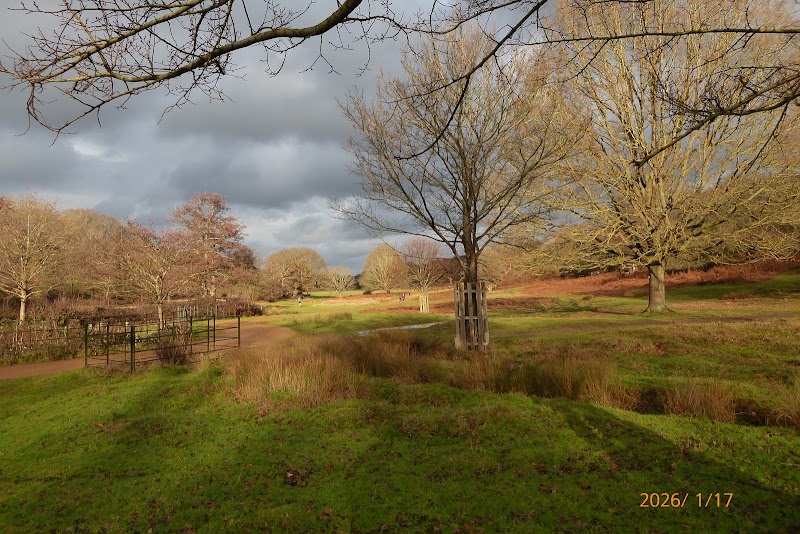
Richmond Park is not a park in the municipal sense at all. It is a working piece of countryside — a mosaic of grazed grassland, bracken, ancient pollards, plantations, bogs and ponds — that happens to have a city wrapped around it. Nothing is bedded out; almost everything you see is the result of centuries of deer browsing shaping the tree line at a constant height.
- Open acid grassland and bracken across the high ground, with skylark nesting zones marked out and signed each spring.
- Enclosed woodland plantations — Sidmouth Wood, Isabella Plantation, Conduit Wood — fenced off so that saplings can survive the deer.
- Ponds and boggy hollows: Pen Ponds, Adam’s Pond, Leg of Mutton Pond, Ham Dip Pond and the Isabella’s chain of Still Pond, Thomson’s Pond and Peg’s Pond.
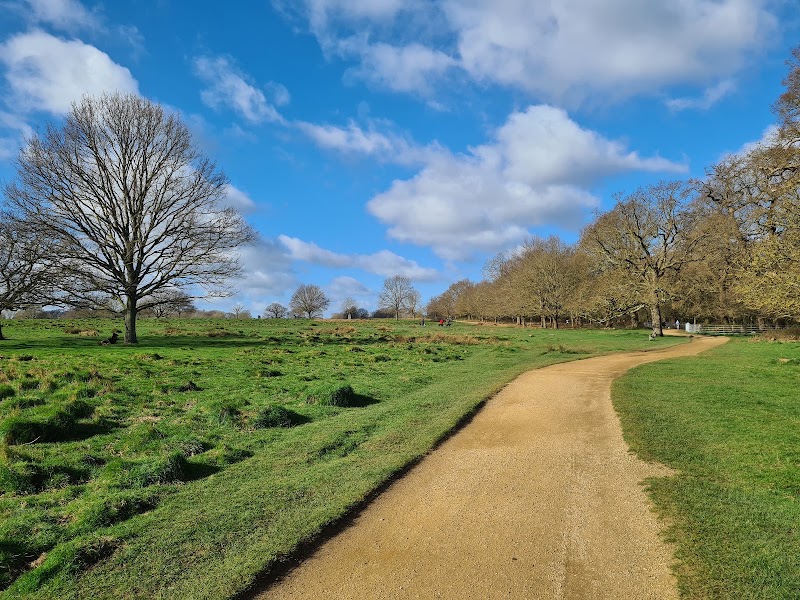
- The Tamsin Trail, a shared-use path of a little over seven miles that loops the entire perimeter without touching a public road.
- Historic buildings within the wall: Pembroke Lodge, the Palladian White Lodge of 1730, Thatched House Lodge and a scatter of keepers’ cottages.
- A public golf course with two eighteen-hole layouts, plus rugby and cricket pitches, riding stables and several car parks tucked behind tree belts.
Things to do — and who it’s for
- Wildlife watchers — the deer rut in September and October is the most dramatic wildlife spectacle in Britain within reach of an Underground station; winter brings the best light and the biggest wildfowl counts.
- Runners and cyclists — the Tamsin Trail is a traffic-free circuit long enough for serious training, and the road loop is a fixture of London club cycling.
- Garden lovers — Isabella Plantation rewards repeat visits: camellias from January, magnolias in March, the azalea peak around the last week of April, then hydrangeas and autumn colour.
- Families with small children — the flat ground around Pen Ponds and the Isabella suits pushchairs, and the plantation’s boardwalks and streams keep children occupied for hours.
- Photographers — low autumn sun through bracken behind a bellowing stag, and mist rising off Pen Ponds at dawn, are the two shots people come back for.
- History and architecture enthusiasts — the protected view from King Henry’s Mound, White Lodge and Pembroke Lodge together tell three centuries of royal and national history in a single walk.
Getting there & practical
The park sits in south-west London, mostly within the borough of Richmond upon Thames, with its wall touching Kingston, Wimbledon and Roehampton. Richmond station is the usual arrival point and is served by the District line, the London Overground Mildmay line and South Western Railway; from there buses 371 and 65 run towards Petersham and Ham for the western gates. For the eastern side, Roehampton Gate is closest to Barnes and Putney, and bus 85 serves Roehampton; for the southern gates, Norbiton and Kingston stations are the shortest walk. Entry is free and there are many gates around the perimeter. Pedestrian gates stand open around the clock for most of the year, but they are locked overnight during the November and February deer culls; vehicle gates open at seven in the morning and close at dusk. Allow at least two to three hours for a meaningful visit, and a full day if you want to combine Isabella Plantation with the ridge and the ponds.
When to visit
Spring is the park’s set-piece: the Isabella Plantation reaches its azalea and rhododendron peak in the last week of April and the first half of May, skylarks are singing over the grassland, and deer calves and fawns start appearing from late May. Summer turns the high ground golden and dry, the bracken shoulder-high, and evenings are long enough for a late walk with swifts overhead. Autumn is the great season — the rut runs through September and October, the oaks and bracken colour spectacularly, and fungi appear across the old grassland, including the waxcaps that helped earn the park its conservation status. Winter strips everything back to structure: bare veteran oaks against frost, big flocks of wildfowl on Pen Ponds, and the clearest chance of the year to see St Paul’s from King Henry’s Mound.
Good to know
Charles I moved his court to Richmond in 1625 to escape plague in London and set about assembling a new hunting ground from farmland, commons and parish holdings. The enclosure was completed in 1637, and the wall he built — roughly eight miles of brick — still defines the boundary today. The seizure was deeply unpopular, and the king was forced to concede rights of way to local people, a compromise that echoes through the park’s later history. In 1758 a Richmond brewer named John Lewis took Princess Amelia, then Ranger, to court after she closed the park to ordinary walkers; he won, and ladder stiles were ordered in the wall so that pedestrians could always get in. Parliament confirmed public access in the Richmond Park Act of 1872. White Lodge, built in 1730 as a hunting box for George II, has housed the Royal Ballet School’s lower school since 1955; Pembroke Lodge was the childhood home of Bertrand Russell, whose grandfather Lord John Russell had been Prime Minister. Isabella Plantation takes its name from a 1771 map marking “Isabell Slade” — a boggy hollow with greyish-brown soil — and was fenced against deer around 1831 by Lord Sidmouth, the former Prime Minister then serving as Deputy Ranger. It was turned into a garden after the Second World War by park superintendent George Thomson and his colleague Wally Miller, and opened to the public in 1953. Today Richmond Park is a National Nature Reserve, London’s largest Site of Special Scientific Interest, designated in 1992, and a Special Area of Conservation designated in 2005 largely on account of its stag beetles, whose larvae spend years feeding in the dead wood of the ancient oaks.
Visitor tips
- Keep at least fifty metres from the deer at all times, and considerably further during the autumn rut and the late-spring birthing season. Never come between a stag and the herd, never feed them, and keep dogs on a lead wherever deer are grazing.
- The park is far bigger than it looks on a map; pick one destination — the Isabella, King Henry’s Mound or Pen Ponds — and walk to it properly rather than trying to see everything in one go.
- Cycling is allowed only on the roads and on the Tamsin Trail, not across the grassland; footwear that copes with mud is worth having from October through to April, when the clay paths hold water.
Questions & answers
Is there any charge to enter Richmond Park? No. Entry is free and always has been, and the pedestrian gates are open around the clock except during the November and February deer culls, when they are locked overnight for safety.
How close can I get to the deer? Fifty metres is the minimum recommended distance, and more is better. The animals are wild and unpredictable, particularly during the September–October rut and when calves are being born from late May, and people are injured most years by ignoring this.
When is the best time to see Isabella Plantation? The azalea and rhododendron display peaks between the last days of April and mid-May, but the garden is designed for year-round interest: camellias from January, magnolias in March, hydrangeas in summer and strong autumn colour in October.
Can I really see St Paul’s Cathedral from the park? Yes, from King Henry’s Mound through a deliberately maintained gap in the trees, roughly ten miles away. The sightline has been legally protected since 1710 and is kept clear of development, though haze often defeats it in summer.
Are dogs allowed? Yes, but they must be kept under close control and on a lead near deer, near ground-nesting birds in the marked skylark zones, and in Isabella Plantation. Chasing deer is both illegal and dangerous for the dog.
Can I cycle in the park? Yes, on the surfaced roads and on the Tamsin Trail, a shared perimeter path of a little over seven miles. Riding across the open grassland or through the plantations is not permitted, and the trail is shared with walkers and runners, so speed needs moderating.
What is there to eat and drink? Pembroke Lodge has tea rooms with the best view in the park, and there are refreshment points near Roehampton Gate and by the golf course. Much of the interior is a long way from any of them, so carrying water is sensible in summer.
How long should I allow? Two to three hours covers one area properly. A full circuit of the Tamsin Trail on foot takes most of a day; combining the Isabella, Pen Ponds and the ridge viewpoints comfortably fills four to five hours.
Photos
Show 1 more photos
Visitor reviews
Reviews last updated: 2026-08-04 08:22:18
Data is refreshed monthly. Sources: londoname.com and editorial picks based on reviews.
You need to drive there or bring a bike with you. I walked 19,000 steps and nearly died.
Be sure to plan a walk through this park. I really loved it
A lovely spot hidden away from view, absolutely brilliant for anyone who wants to take a stroll, sit down and read a book, and enjoy the quiet and cosiness.
I'm so glad I visited this place. In three hours I managed to see loads of deer. I made it to the flower garden, where you can come across ducks — they're absolutely everywhere. Some flowers are only just starting to ope…
An interesting area. A lot of people from Asia live there, Chinese people. You need a good level of English. There are lots of parks, shopping centres, cafés, and the Tube runs there. We stayed in a small hotel we booked…