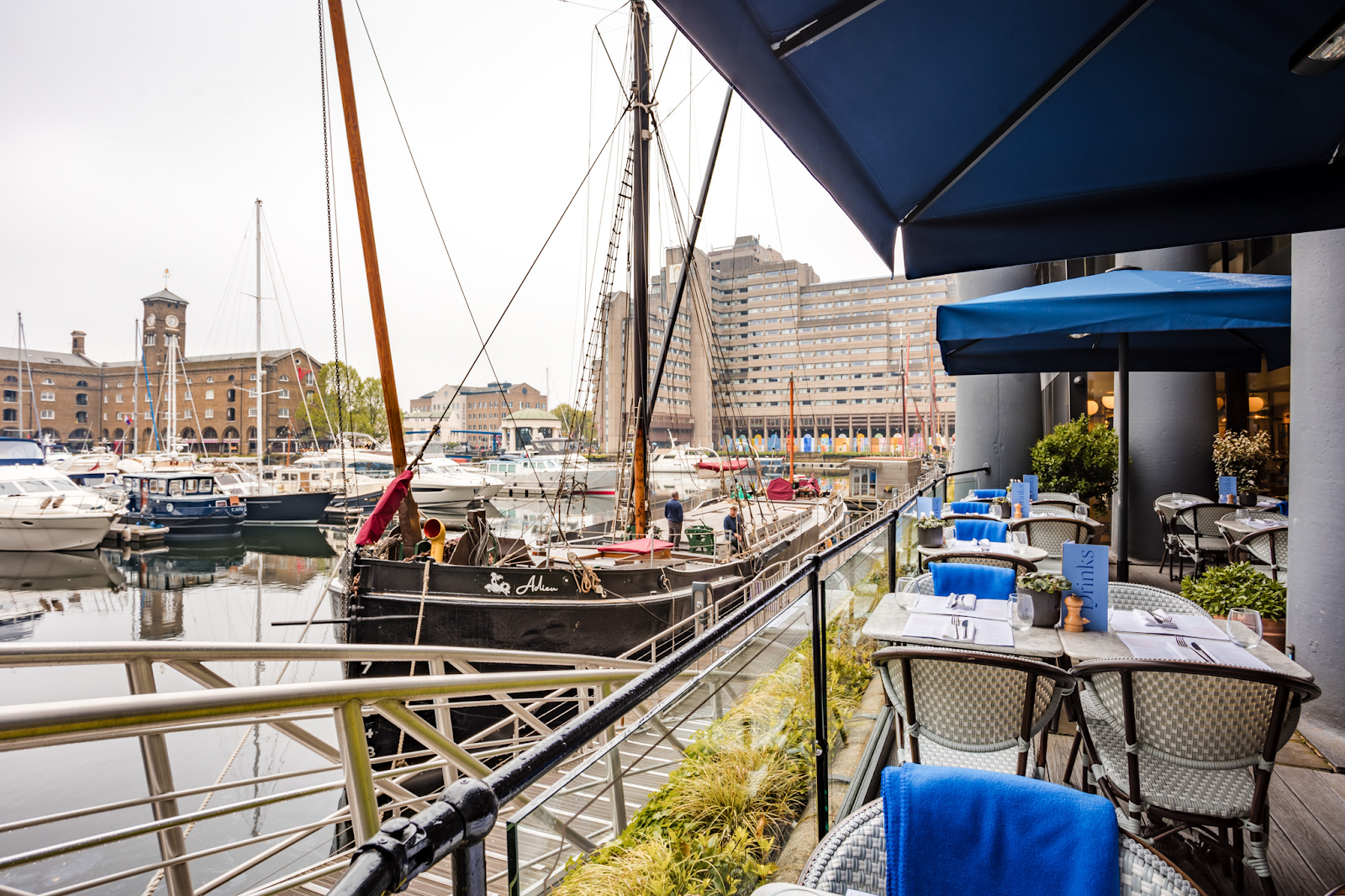
At the turn of the 19th century, St Katharine Docks emerged as a revolutionary solution for London, introducing a system of warehouses built quite literally at the water’s edge. In their heyday, they handled tonnes of spices, tobacco, and even weaponry, sustaining the imports that fuelled the imperial economy. Today, this once-closed industrial hub has been transformed into a picturesque district where the historic docks blend seamlessly with 1970s architecture. Read more about how a restricted area for ordinary Londoners became a public space with a view of the water on londoname.
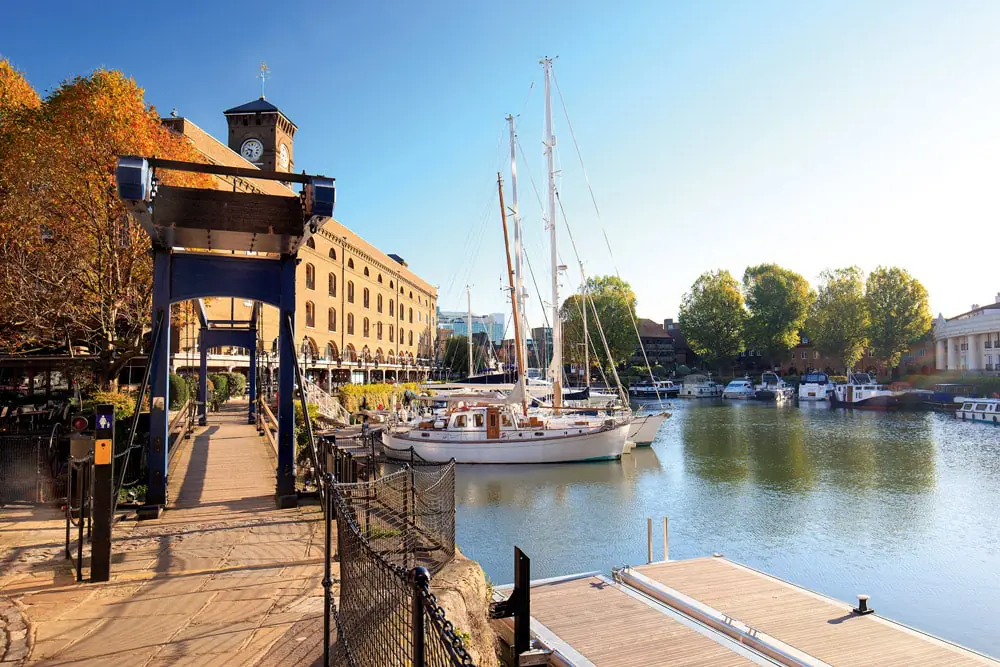
The Birth and Boom of St Katharine Docks
The renowned Scottish engineer, Thomas Telford, designed St Katharine Docks with a focus on maximum space utilisation. The complex comprised two interconnected basins, accessed from the Thames via a specialised lock. This configuration was crucial for optimising ship movement and speeding up cargo operations, an essential feature for a rapidly expanding trade port. Architect Philip Hardwick created the complex of surrounding warehouses, positioning them to allow for the most convenient loading of goods directly from the quayside. To pay homage to the site’s historical significance, a campanile (bell tower) was incorporated into the design.
Construction began in 1827 and necessitated the complete demolition of nearly 1,250 adjacent houses and the ancient St Katharine’s Hospital, which had stood on the site for almost seven centuries. Its relocation sparked a wave of public outrage. This anger was compounded by the fact that 11,000 residents—mostly poor dock workers—were forced out of their homes. Crucially, compensation was only offered to official property owners, leaving many families in dire straits. Protests and active lobbying continued for decades, but the final ruling by the House of Lords in 1880 definitively settled the disputes.
St Katharine Docks were officially opened on 25 October 1828. Despite the cutting-edge engineering of the time, they proved unsuitable for larger vessels and were unable to compete effectively with the city’s other harbours. In 1864, they were amalgamated with the London Docks, and by 1909, they became part of the Port of London Authority. By the 1930s, the General Steam Navigation Company ships were practically the only regular users, signalling the gradual decline of their commercial importance.
Despite their eventual challenges, St Katharine Docks were an important part of London’s port life for a long period of active service. They gained particular renown for handling smaller clippers and expedition vessels. It was from here that Captain Robert Scott’s ship set sail, alongside other legendary mariners seeking new routes and exploring unknown worlds. However, the docks’ fortunes changed drastically with the start of the Second World War. They suffered severe damage during the Blitz. The Eastern Basin, in particular, was hard hit, with all the surrounding warehouses completely destroyed. The basins themselves remained, being used for a time by a sea cadet training school.
Reimagining the Space at St Katharine Docks
By the 1960s, it was clear that St Katharine Docks could no longer compete with large, modern ports. They were officially decommissioned in 1968, and the area was subsequently sold to the Greater London Council. Shortly after, the plot was leased to the property development company Taylor Woodrow, which embarked on a massive redevelopment project. In the early 1970s, most of the warehouses around the Western Basin were demolished and replaced by contemporary commercial buildings. One of the most noticeable new additions was the enormous Tower Hotel, built along the waterfront near Tower Bridge. Development of the eastern section took longer and was not completed until the 1990s.
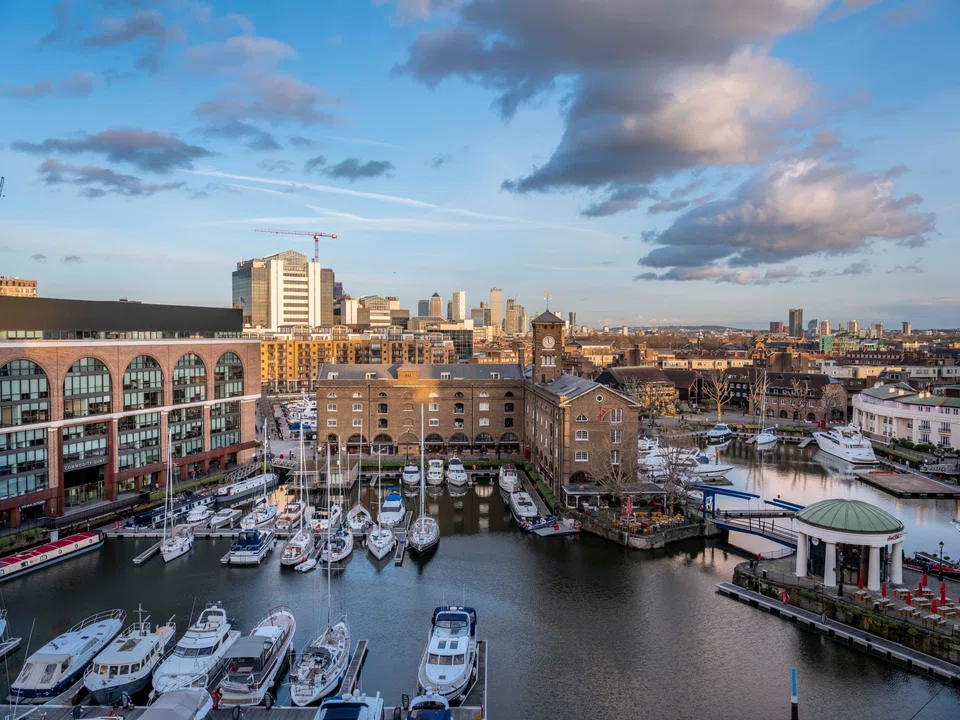
In the 21st century, the site of the former warehouses now hosts offices for international companies, restaurants, shops, and one of the district’s most famous pubs, The Dickens Inn, which itself opened in the 18th century. A large hotel is situated here, and the area buzzes with various entertainment venues, attracting both tourists and locals alike. The eastern part of the docks has been transformed into the prestigious City Quay residential complex, boasting over 200 private apartments overlooking the marina. Nearby, the South Quay Estate emerged—a residential area initially intended as social housing but now an integral part of the comfortable urban environment. Despite the huge transformation, the marina remains actively used by small and medium-sized vessels.
Recognition and Significance of St Katharine Docks
St Katharine Docks hold a special place in London’s history due to their combination of technical innovation, economic function, and cultural heritage. Thomas Telford pioneered the concept of warehouses built directly on the quayside, enabling cargo to be unloaded straight from moored ships into storage facilities. This approach significantly cut down on processing time and eliminated the need for the large open dock spaces characteristic of older ports. This made the complex the main hub for storing ‘luxury’ imports, from African ivory to Japanese silk. The Western Dock specialised in raw materials from around the globe, while the Eastern Dock was the centre for storing finished products, often destined for export, including supplies for the British Army in India.