

Throughout its history, London has been an example for many cities around the world. Its development in various spheres has enabled it to achieve a high standard of living. Developments and innovations have been and remain an integral part of the capital of Great Britain. Often, a great number of these were first implemented in London. In particular, the search for energy to support the city’s daily life has always been crucial. Everyone knows the story of the creation of the world’s first public coal-fired power station, but what other interesting sites can be found in London? Another fascinating example of supplying the city with energy is the story of the Wapping Hydraulic Power Station. What was its role in London’s functioning over several centuries, and what makes the station stand out in the modern world? More at londoname.
Establishment and Subsequent Development
In truth, the Wapping Hydraulic Power Station has undergone a long journey of development. This facility was built during a time of global change, when the world was just getting to grips with one new invention as another development was already taking its place. Thus, the history of this station is rich with improvements. It’s a journey from steam (as a source of power) to the station’s recognition as a site of architectural heritage. This story began in 1890. Given London’s rapid development, it’s worth noting that the city’s steam engines formed an entire system controlled by a dedicated company. Wapping Hydraulic Power Station was one of five stations operated by the London Hydraulic Power Company.
The station’s design allowed for the hydraulic distribution of power. At the end of the 19th century, electricity was not yet widespread and was typically supplied only to essential sites. At that time, power was most needed for various industrial mechanisms and machinery. However, this hydraulic power station is also known for supplying electricity to theatres. Theatrical arts were experiencing a significant boom, and much of the equipment, scenery, and other elements were mechanised. Thus, thanks to the Wapping Hydraulic Power Station, power was supplied for the full or partial operation of the London Palladium, Leicester Square Theatre, Her Majesty’s Theatre, and Drury Lane. In some theatres, this was enough to power a revolving stage, whilst in others, this energy operated the safety curtains, and at the Leicester Square Theatre, it powered the console lifts for the organ. Furthermore, the station supplied power to the National Gallery and the Royal Academy, and Tower Bridge and a number of department stores also depended on it.
Significance in the Modern World
Over time, electricity became more common and its cost decreased. Countless alternative sources of energy were found, and a great number of new stations were built, whose structure and operation greatly simplified the overall processes. Wapping Hydraulic Power Station was closed in 1977. It’s worth noting that this was surprisingly late. By then, the city had been supplied with energy by other facilities for several decades, and the station’s closure would have changed very little. For a long time, it remained the last of its kind not only in London but in the entire world.
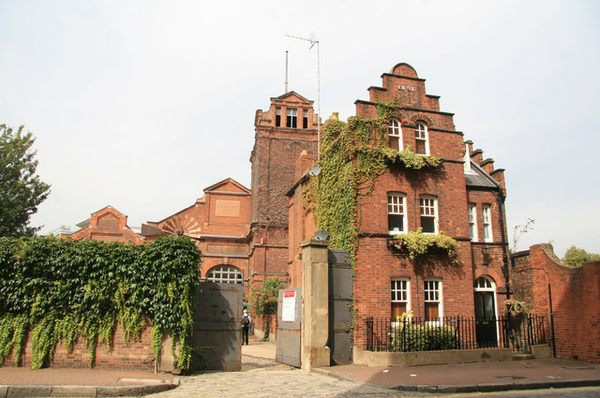
After the station ceased operation, a new chapter in its history began. In December of that same year, the building was listed as a site of architectural importance, and this attracted the attention of the arts community. The building itself was redeveloped by the architectural firm Shed 54, and in 1993, the first exhibition was held here. This drew people in, as the station had not only become an arts centre but had also retained much of its original equipment. Many exhibitions took place in this unique space. In 2013, the developer UK Real Estate acquired ownership of the building. A few years later, it became known that the building was being refurbished to house a number of restaurants and offices.