

There are many beautiful places in the world. Each one has its own peculiarities and characteristic features, but some of them are truly unique natural locations. Kew Gardens in London is just like that. This botanical garden is one of the largest in the world in terms of the number of different plant species. This place is a London gem, which is visited by hundreds of residents and guests of the city every day. What is the history of its creation and further development? Learn more at londonname.
The beginning of the history
The official date of the Kew Gardens foundation is considered to be 1759. Although, in fact, its creation took place earlier, as the first mentions of the transformation of the area date back to the 13th century. In 1299, there was a royal residence located there, which had a significant influence on the development and planning of the gardens. The place has a rather long history of development, so it is worth starting from 1670 when Lord Henry Capell created a beautiful place with a lot of amazing plants. Since then, Kew Gardens has experienced a lot of different events before reaching its current look.
Further development
George III expanded the territory of the garden. The first small architectural structures were created at that time too. Despite the fact that this place was home to the most unique and rare types of plants, they were mostly in a chaotic order. Most likely, the place lacked a person who could organise the collection. However, the situation improved significantly in 1771 when the botanist and gardener Francis Masson was appointed as the first collector. The botanical garden flourished even more when George III involved several more botanists. Their activity was really necessary for the further development of this beautiful place. In 1781, the King purchased the freehold over the Dutch House, located near the gardens. Today, this building is known as Kew Palace and is one of the oldest architectural structures in Great Britain. After a certain period of decline starting in 1837, Kew Gardens received the status of a national botanical garden. During the entire history of the garden’s existence, its main building was rebuilt and reconstructed several times. From 1959 to 2007, the highest flagpole in Great Britain was located on the territory of Kew Gardens. In 2003, the botanical garden was included in the list of UNESCO World Heritage Sites.
The main features of the botanical garden
One of the most interesting local forms of entertainment is the treetop walkway. It resembles a bridge that winds along the plantations and allows you to view the area from above. Thus, you can make your childhood dream of a tree house come true. The Lake Crossing bridge is another gorgeous object that harmoniously complements the general atmosphere of the botanical garden. It connects two art galleries. The minimalist style perfectly complements the forest clearing nearby. It is also one of the most popular locations for taking photos.
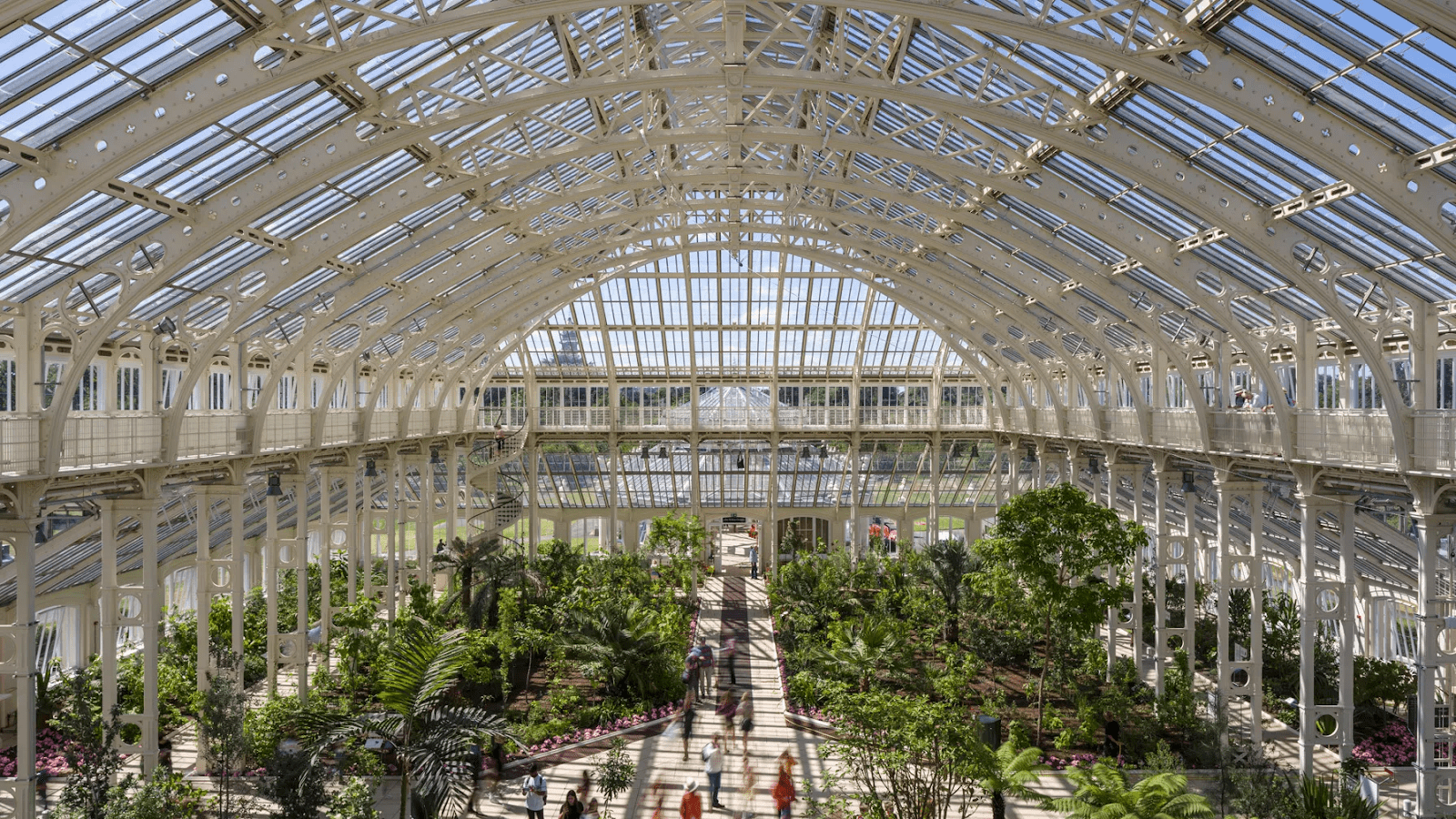
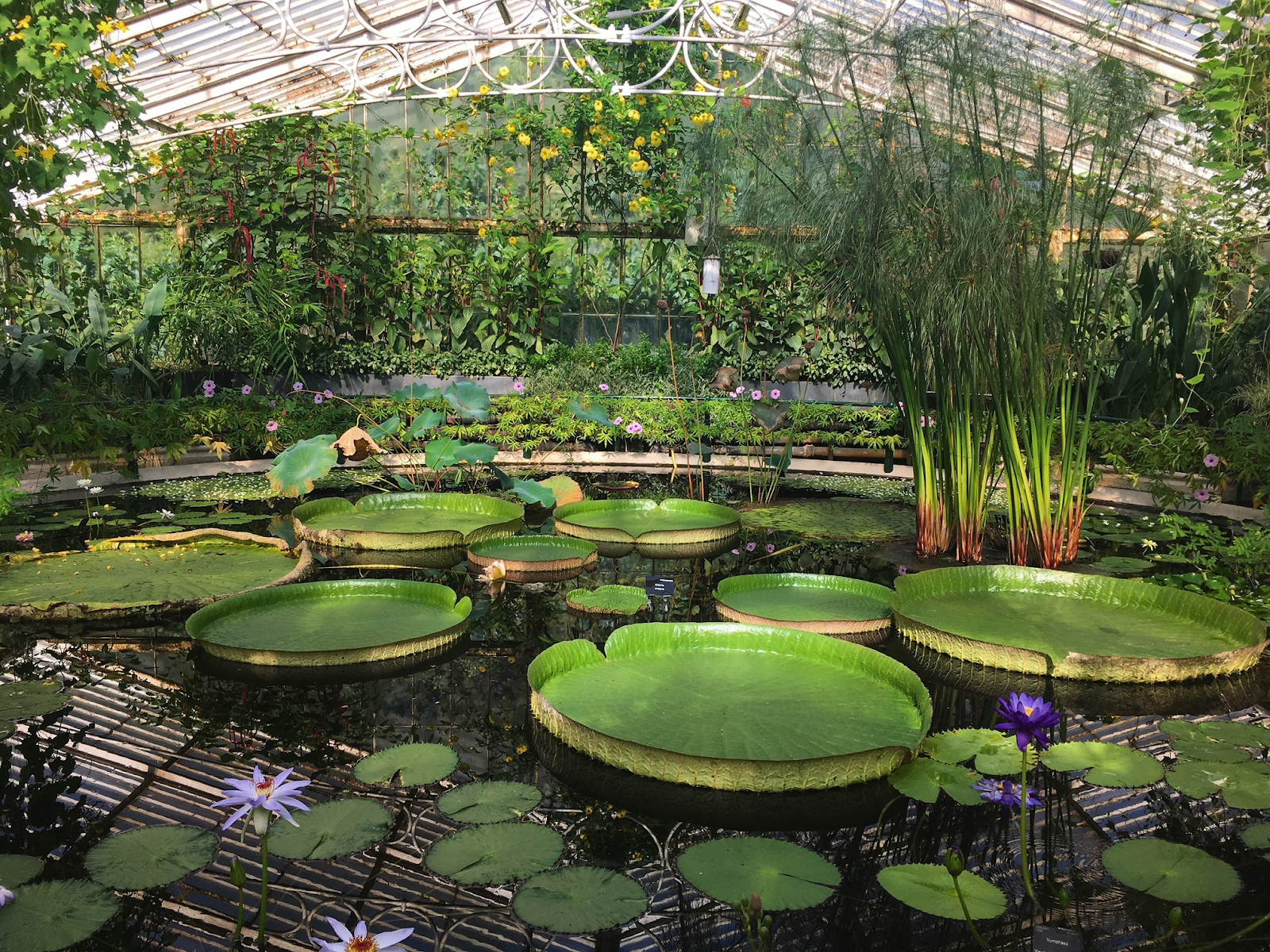
Plant houses are the main objects on the territory of the garden. These structures impress with their unique architectural features, while the plants amaze with a wide variety of species. For example, Davies Alpine House, which was opened in 2006, is equipped with automatically controlled blinds that prevent the plants from overheating when the sun is shining and a system that blows the plants a continuous stream of cool air. Letting the maximum amount of daylight was the main goal of its design. It is just one of the most interesting examples. In general, the botanical garden has many unique plant houses.