

Park · London · ⭐ 9.5/10 · 13865 reviews · updated: 2026-08-04 08:22:22
Address: Holland Park, Holland Park Ave, London W11 4UA, United Kingdom
Kyoto Garden — the stroll garden Kyoto gave to London
Kyoto Garden is not a park in its own right but a compact Japanese stroll garden set inside Holland Park, the largest green space in the Royal Borough of Kensington and Chelsea at some 54 acres. It was designed by the Japanese garden master Shoji Nakahara, donated by the Kyoto Chamber of Commerce and Industry in partnership with the borough, and opened in September 1991 by the then Prince of Wales, now King Charles III, together with the then Crown Prince of Japan, now Emperor Naruhito. The garden was created ahead of the Japan Festival held in London in 1992.
Highlights
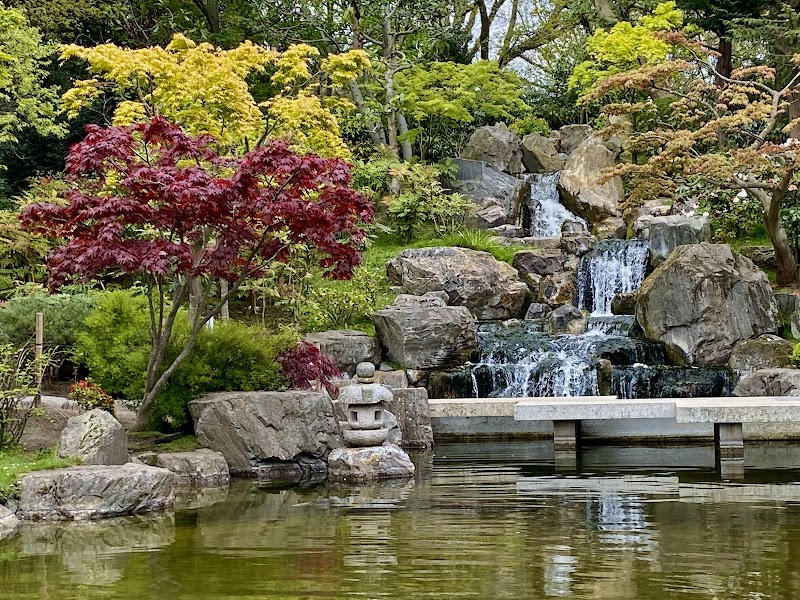
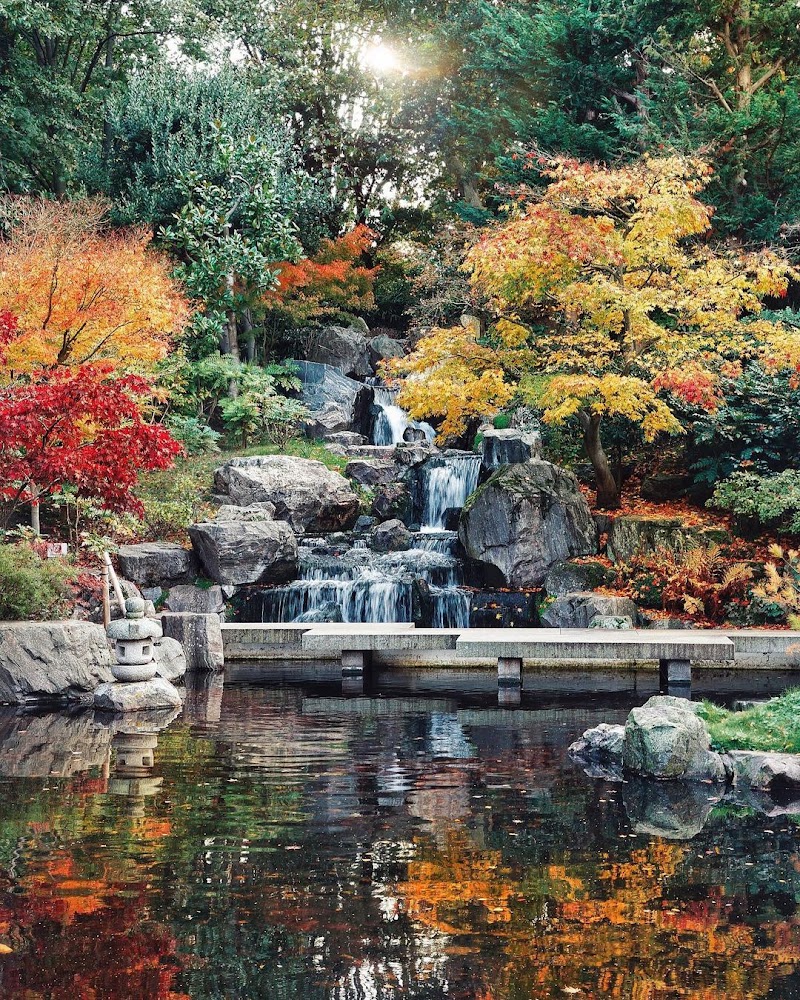
- The tiered waterfall — a stepped stone cascade standing in for a mountain stream, feeding the pond below.
- The koi pond — the composition’s centre, stocked with coloured carp that carry deep symbolic weight in Japanese culture.
- Japanese maples — the reason the garden is packed out every November, when the leaves turn scarlet and gold.
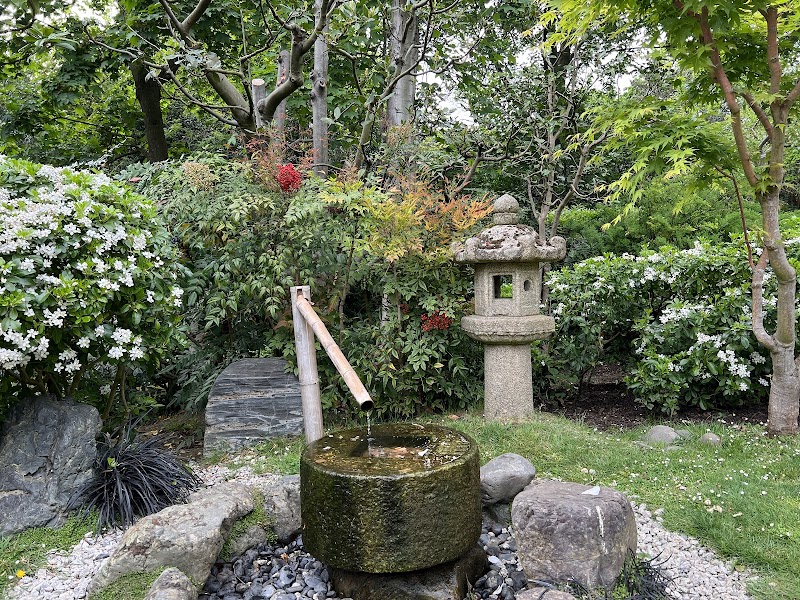
- Stone lanterns and stepping stones — placed in the classical stroll-garden idiom, where each turn of the path reveals a new framed view.
- Free-roaming peacocks — Holland Park’s resident birds regularly display beside the water.
- Fukushima Memorial Garden — a second Japanese garden added alongside in 2012.
What’s inside
Nakahara built a whole landscape in miniature: the waterfall reads as mountains, the pond as an ocean, the planting as forest.
- A stepped waterfall dropping into a still pond that mirrors the surrounding trees.
- Koi carp visible from the pondside rocks and the low bridge.
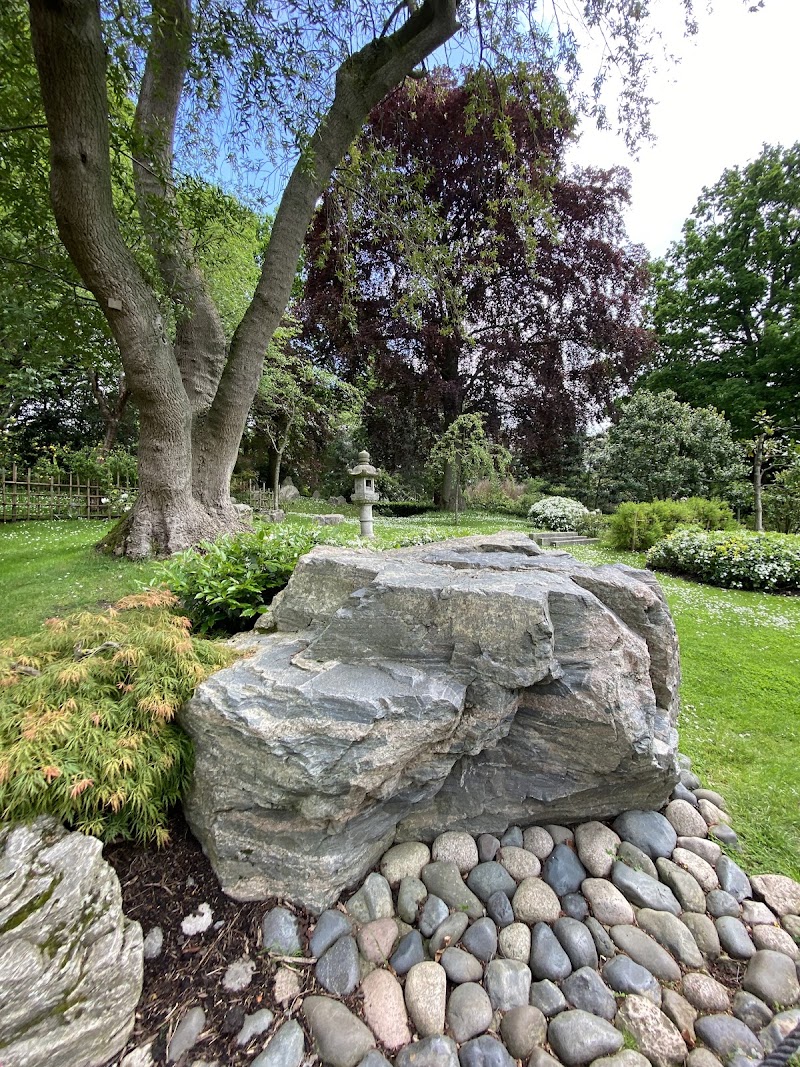
- Carved stone lanterns, placed boulders and stepping stones set into the water margin.
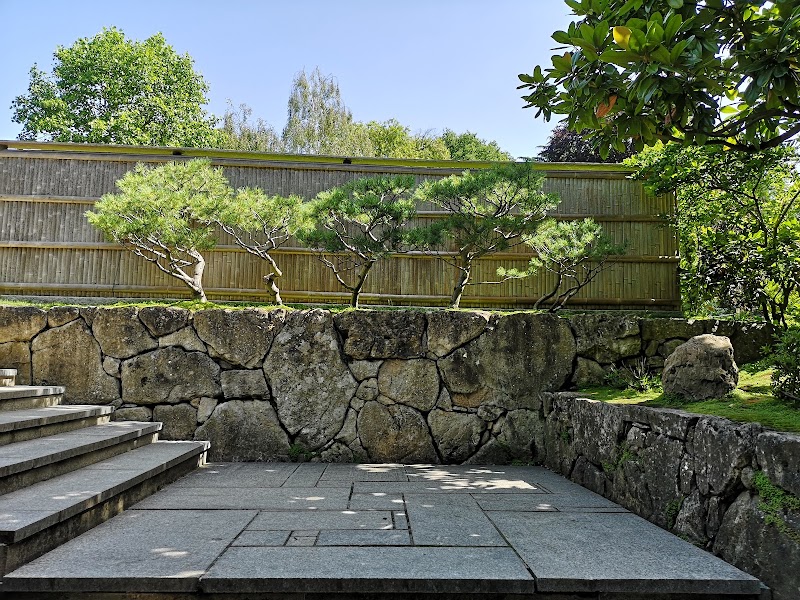
- Japanese maples, cherries, azaleas and clipped evergreens layered by height.
- Winding gravel paths that deliberately hide and re-reveal the pond as you walk.
- The neighbouring Fukushima Memorial Garden, quieter and less photographed.
- Beyond the gate, the rest of Holland Park: woodland, the Dutch Garden, sports areas, an Ecology Centre, two playgrounds, an outdoor gym and a café.
What to do and who it’s for
- Photographers — reflections on the pond are cleanest before the wind gets up, and the maples peak in late autumn.
- Couples — a genuinely quiet enclosure a few minutes from one of London’s busiest shopping streets.
- Families — children come for the koi and the peacocks; the playgrounds are a short walk away in the wider park.
- Garden enthusiasts — a textbook example of the stroll-garden tradition built by a Japanese designer rather than imitated.
- Culture visitors — the Holland House ruins host open-air opera and concerts through the summer.
- Slow walkers — the garden rewards standing still far more than covering ground.
Getting there and practicalities
The garden lies in Kensington, west London. Holland Park on the Central line is the nearest Underground station; High Street Kensington on the Circle and District lines and Kensington (Olympia) are also within easy walking distance. Entry to both the garden and Holland Park is free. The park opens at 7.30am and closes at dusk, with gates shut shortly before the advertised time, so hours shift sharply between midsummer and midwinter. Cycling, barbecues and dogs are not allowed inside the Japanese garden. Allow 30 to 45 minutes for the garden itself, or half a day for Holland Park as a whole.
When to visit
Late October into November is the spectacle, when the maples turn and the pond doubles the colour. April and May bring cherry blossom and the azaleas, a softer and far less crowded show. Whatever the season, the first hour after opening gives still water, clean reflections and space to stand at the pond edge; by mid-morning on an autumn weekend the path around the water can be nose to tail. Winter strips the garden back to its stonework and structure, which is when Nakahara’s composition is easiest to read.
Worth knowing
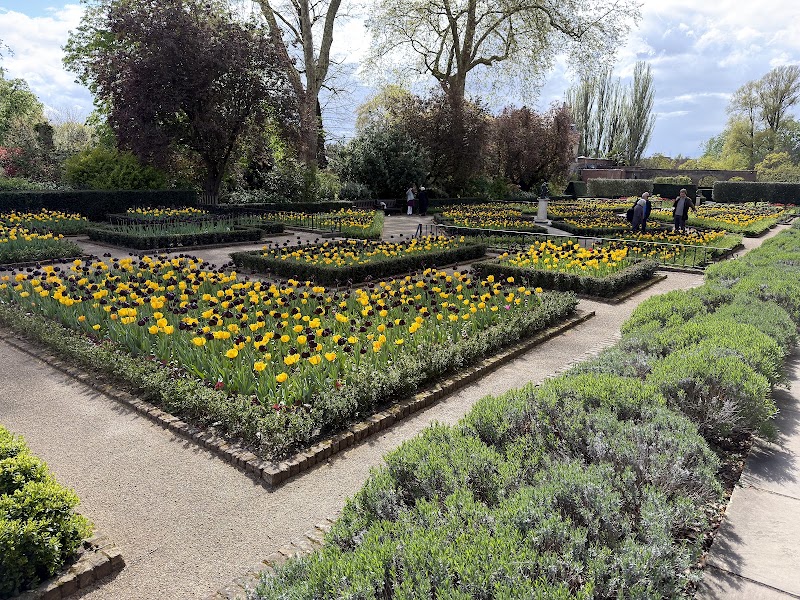
Holland Park takes its name from Holland House, built in 1605 as Cope Castle for the diplomat Sir Walter Cope and enlarged between 1638 and 1640 for his son-in-law Henry Rich, the 1st Earl of Holland. In the nineteenth century it was one of the great Whig political salons of London. Incendiary bombing gutted the house in 1940; the London County Council bought the ruins in 1952, one surviving wing now serves as a youth hostel, and the remaining terrace is the stage for summer opera. In the park’s Dutch Garden, Lady Holland was credited with the first successful cultivation of dahlias in England in 1805, and the house was famous for them for decades afterwards. The Fukushima Memorial Garden was laid out in 2012 in recognition of British support for the Fukushima region after the 2011 earthquake and tsunami.
Visitor tips
- Arrive at opening time — it is the single biggest difference between a serene visit and a queue for the bridge.
- Do not feed the koi or the peacocks; supplementary food harms both.
- Stay on the marked paths and off the moss and rockwork, which is fragile and slow to recover.
- A weekday in autumn beats a weekend in autumn by a wide margin.
- Walk on into the woodland and the Dutch Garden afterwards — most visitors photograph the pond and leave.
Questions and answers
Is Kyoto Garden free to visit? Yes, both the garden and the surrounding Holland Park are free to enter.
Is it a park or a garden? It is a garden — a compact Japanese stroll garden enclosed within the much larger Holland Park.
Who designed and gave it? Japanese garden designer Shoji Nakahara laid it out; it was a gift from the Kyoto Chamber of Commerce and Industry, opened in September 1991.
When is the autumn colour at its best? Late October through November, when the Japanese maples turn.
Are there really peacocks? Yes — Holland Park’s peacocks roam freely and often display near the garden.
How long should I allow? Half an hour to 45 minutes for the garden; a half day if you explore Holland Park properly.
Can I bring a dog or a bike? No. Dogs and cycling are not permitted inside the Japanese garden, and dogs must be on leads elsewhere in the woodland and formal gardens.
What is the second Japanese garden next door? The Fukushima Memorial Garden, created in 2012 to thank Britain for its support after the 2011 tsunami.
Photos
Show 1 more photos
Visitor reviews
Reviews last updated: 2026-08-04 08:22:22
Data is refreshed monthly. Sources: londoname.com and editorial picks based on reviews.
A lovely, cosy park. Not very big, but charming.
A wonderful place — meditative and uplifting; a great photo spot
I love this park — quiet and cosy, everything is always perfect. Delicious cafés.
A lovely park with a Japanese garden.
Unfortunately, to get a closer look or take photos you have to wait in a long queue. But that might only be the case at weekends.
A small but very beautiful garden. I liked it very, very much. Lots of people…..