

The concern of the London government and residents about global problems resulted in lots of different programmes and projects. Most of such ideas have already been successfully implemented in the city. Some projects impress with their modernity, functionality and uniqueness. One of them is BedZED. It is an ecological housing development in London. In the past, people shot films based on such ideas in a fantasy genre. However, in the modern world, there is a real community that helps nature. How did people manage to implement this idea and what are the basic principles of its functioning? Learn more at londonname.
The history of the community or how to implement an ecological idea?
Even though ecological ideas became popular only at the beginning of the 21st century, the designing stage of the housing development began back in 1997. It all started when a land plot in the London borough of Sutton was put on sale. The Bioregional charity organisation, which was founded in 1994, got interested in the offer. In the following year, representatives of the organisation, architects and engineers, managed to convince the government that the creation of an eco-friendly community would provide a number of benefits for society. First of all, it would involve reducing carbon dioxide emissions. The representatives of the local self-government agreed to sell the land at a reduced price. The construction was completed in 2002. That was how one of the first residential housing developments in the world that met the sustainable principles appeared.
Features of living in BedZED
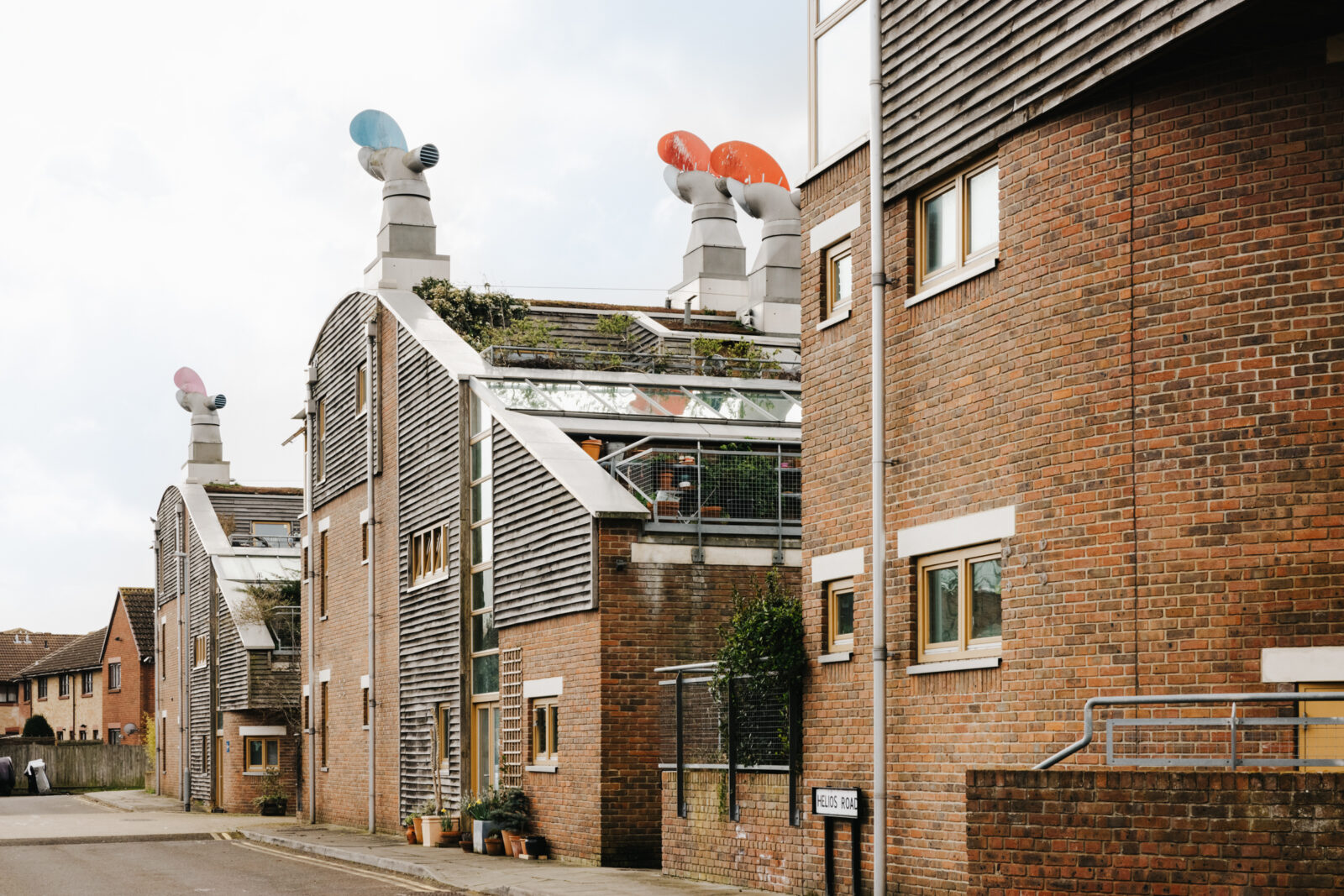
The main goal of such ecological housing was to reduce the negative impact of human activity on nature. The engineers faced significant difficulties finding alternative sources of heat and light. One of the main conditions was to achieve zero use of fossil fuels. This issue was solved by installing solar panels. In addition, significant energy savings became possible thanks to good insulation and tightness. However, sunlight couldn’t ensure the constant availability of hot water. Therefore, its supply is carried out by a centralised heat supply system. The ventilation system is quite interesting as well. Air circulation is ensured by multi-coloured (hoods-like) openings on the roofs. They add to the uniqueness of the buildings’ appearance. During the BedZED construction, lots of attention was paid to reducing water consumption. This area of London often suffers from a lack of this resource, so its excessive use is inappropriate. The housing system allows you to accumulate water during rain and store it thanks to special devices. The improvement of all these technologies really gives the desired result. For example, the housing development reduced gas consumption by 36% and electricity consumption by 27% between 2012 and 2015.
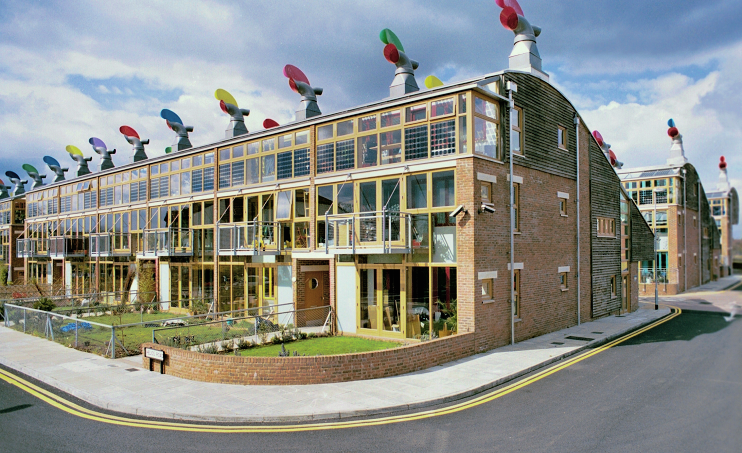
In total, there are approximately 100 different houses, housing 220 people in the territory of the community. They vary in size, shape and amount of greenery around. Here, you can find both small apartments and detached houses. BedZED territory features gardens and other green areas. Moreover, there is a playground and a place for storing bicycles, which is guarded around the clock. BedZED has been awarded several times for the implementation of such an interesting project. In 2001, the community won the Evening Standard New Homes Award. Later, it won the RIBA London Awards and the Ashden Award.