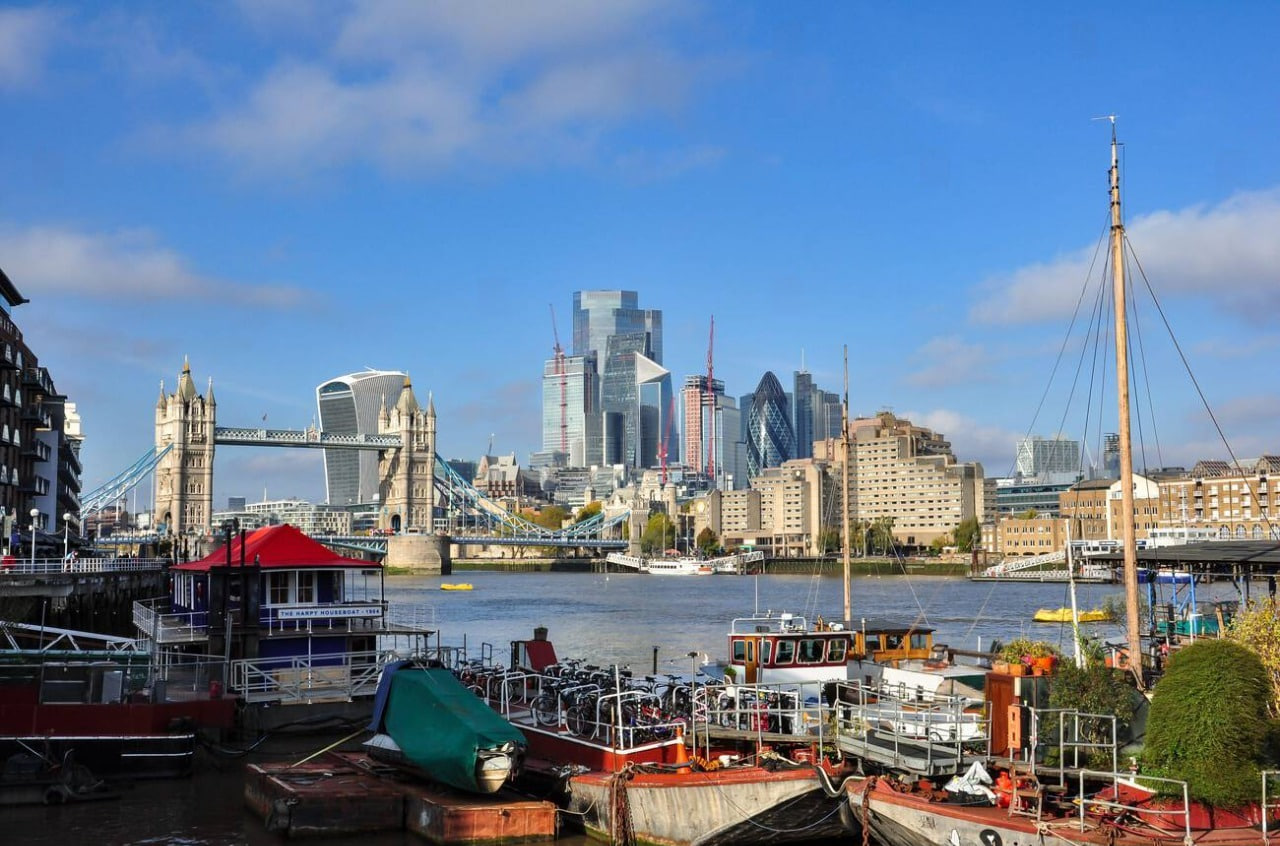
The story of Saint Saviour’s Dock stretches back to a time when the Thames was the primary highway for merchants, monks, and adventurers alike. It was an era defined by a gritty urban rhythm of disease, pirate raids, and public executions. In this volatile environment, the dock naturally evolved into a vital part of London’s shifting landscape. Read more on londoname.
Origins and Development
In the 11th century, a community of Cluniac monks settled at Bermondsey Abbey. They worked the land, fortified the riverbanks, and built dykes, transforming the marshy wetlands into a vast agricultural complex known as the Priory precincts. By the 13th century, the clergy had adapted the tidal inlet at the mouth of the River Neckinger into a monastic harbour. Thus, Saint Saviour’s Dock was born, named in honour of the Abbey’s patron. It became a crucial safe haven for vessels carrying bishops and goods, allowing them to bypass the dangerous currents and congestion of the old London Bridge with its narrow stone arches.
Over time, the ownership and names of the surrounding area shifted. By the late 15th century, parts of the land belonged to the Knights of the Order of St John of Jerusalem. The area became known as St John at Thames, a name that was gradually corrupted over centuries into the now-famous toponym Shad Thames. The dock itself remained a unique natural feature, standing out on contemporary maps as the only inlet of its kind along this stretch of the river. Alongside it, the Bermondsey Abbey mill worked tirelessly, grinding corn for the monastery.
As London expanded, Bermondsey gradually transformed into an industrial hub. By the early 17th century, the banks of both the Thames and Saint Saviour’s Dock were densely built up, and by the century’s end, development had engulfed both sides of Shad Thames. Eventually, the river became so congested with traffic that cargoes were often left languishing on board for weeks. Simultaneously, the area gained a notorious reputation due to pirates raiding moored vessels. Justice for these crimes was brutal and performative—captured criminals were hanged right at the entrance to the dock as a grim warning to others.
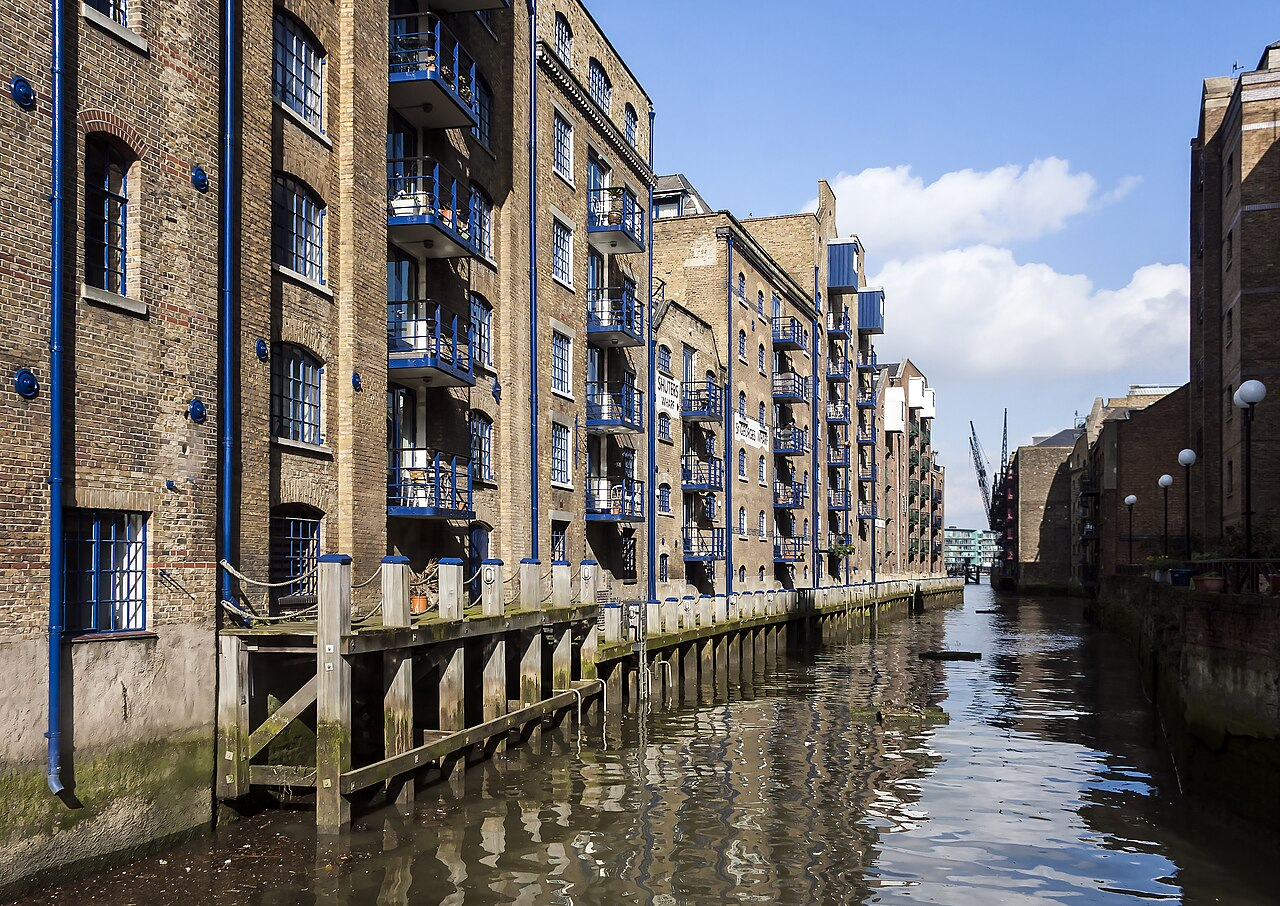
In the 19th century, the area around Saint Saviour’s Dock became the heart of the leather industry—a trade that defined the borough. Alongside the tanneries and workshops stood vast warehouses filled with imported goods: tea, spices, and other colonial produce arrived in London via the river. The dock served as a gateway through which exotic luxuries reached the capital’s markets. However, this progress had a dark underbelly. The notorious Jacob’s Island area became home to Bermondsey’s most destitute residents. Their main source of water was the old mill stream, which had stagnated into a fetid, open sewer. Overcrowding and unsanitary conditions led to constant outbreaks of disease, making the area a symbol of the crushing urban poverty of Victorian London.
By the latter half of the 20th century, the industrial utility of the docks had all but vanished. This decline forced the authorities to rethink the area’s potential. Its proximity to the City of London’s financial district, combined with scenic river views and the unique architecture of the old warehouses, made Saint Saviour’s Dock highly desirable for both living and working. The neighbourhood began to acquire a status that was both trendy and prestigious. Although a wave of redevelopment in the 1980s and 90s resulted in the loss of some historical structures, the conversion of many warehouses into luxury flats and lofts saved a significant portion of the heritage buildings.
Legacy and Significance
The historical significance of Saint Saviour’s Dock lies in the strategic role it has played since the Middle Ages. Initially, it provided a safe anchorage downstream of London Bridge, facilitating trade, supply chains, and ecclesiastical travel. For centuries, the dock supported mills, warehouses, and countless artisan and industrial enterprises, serving as a vital node in the city’s economy. Today, it has achieved cultural and architectural recognition. In the post-industrial era, its gritty past has been reimagined as invaluable heritage, preserving the memory of a riverside that once teemed with monks, merchants, and the condemned.